

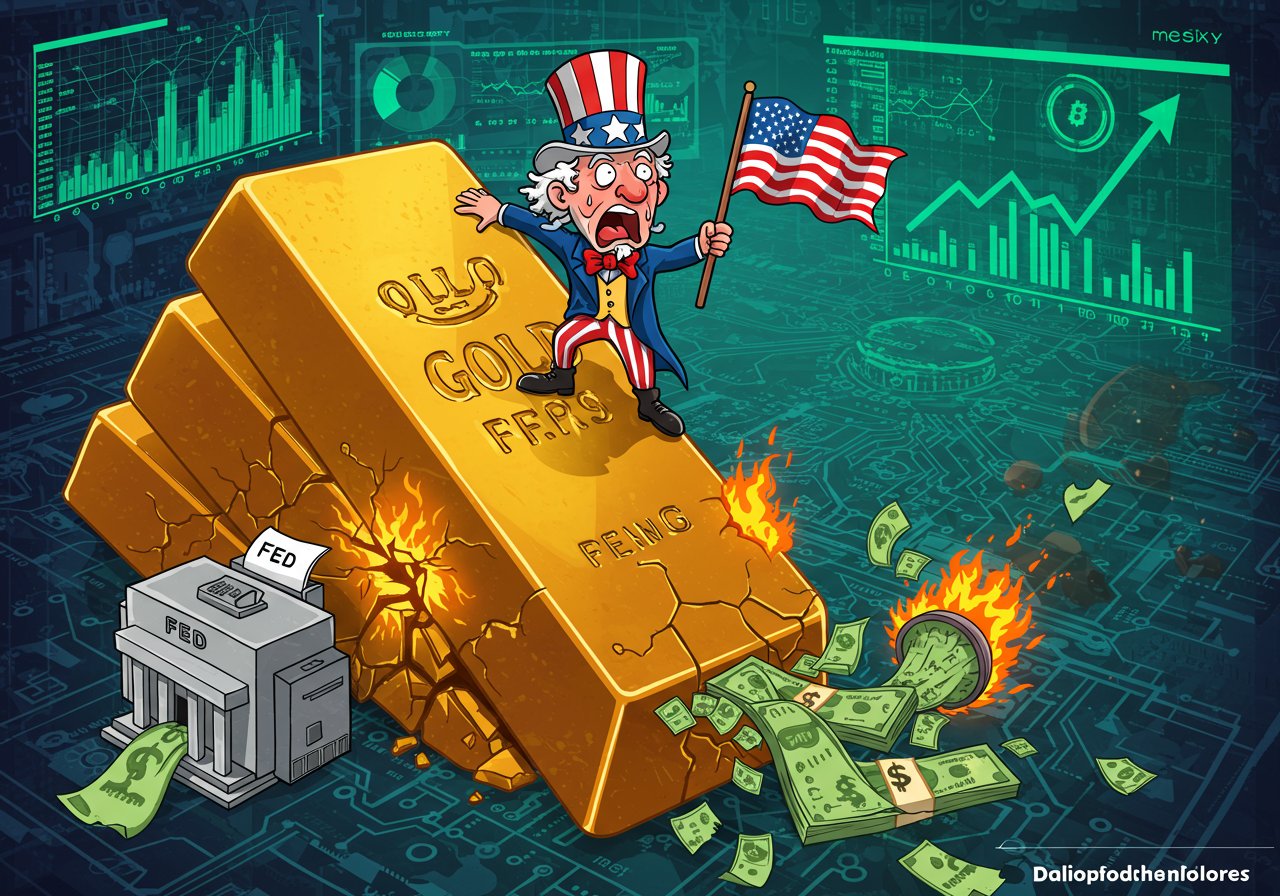
Dalio’s Stark Warning
Bridgewater Associates founder Ray Dalio has issued a potent warning about the Federal Reserve‘s current economic policies, suggesting they’re actively inflating a bubble. This assessment, delivered with Dalio’s characteristic clarity, centers around the perceived disconnect between the Fed’s actions and the long-term health of the economy.
The Core Argument: Bubble Dynamics
Dalio’s primary concern revolves around the impact of fiscal and monetary policies on asset prices. He believes that these policies, designed to stimulate the economy, are instead driving up the prices of hard assets. While this might seem positive in the short term, Dalio argues it’s a symptom of a deeper, late-stage economic condition. This isn’t just about inflation; it’s about the distortions caused by excessive liquidity and artificially low interest rates.
Implications for Investors
For investors, Dalio’s perspective carries significant implications. He anticipates that hard assets, including commodities and potentially cryptocurrencies, will likely increase in value. This shift could necessitate a reevaluation of portfolio allocations, as traditional asset classes might underperform in a bubble environment. However, Dalio’s message isn’t solely about investment strategies; it’s a broader commentary on the sustainability of the current economic trajectory.
The Late-Stage Economic Thesis
Dalio’s view aligns with the concept of late-stage economic decay. This theory posits that policies designed to counteract downturns, like quantitative easing and low interest rates, ultimately exacerbate underlying structural problems. These problems might include excessive debt, widening wealth inequality, and a reliance on short-term fixes rather than long-term reforms. The result is often a cycle of booms and busts, with each cycle potentially more volatile than the last.
Contrasting Perspectives
It’s important to recognize that Dalio’s analysis is not universally accepted. Some economists argue that the Fed’s actions are necessary to support economic growth and prevent a deeper recession. They might point to the strength of the labor market or the resilience of corporate profits as evidence against a bubble. Others might argue that new technologies and changing economic dynamics warrant a different approach to monetary policy.
What Does This Mean for Bitcoin?
While Dalio’s warning doesn’t directly mention Bitcoin, his focus on hard assets and inflation is relevant. Bitcoin, often viewed as a hedge against inflation and a store of value, could potentially benefit from the conditions Dalio describes. However, Bitcoin’s volatility and its relatively nascent stage in comparison to traditional assets should be carefully considered by investors.
The Road Ahead
Ultimately, Dalio’s warning is a call for vigilance. It urges investors to understand the risks associated with the current economic environment and to position themselves accordingly. Whether his predictions come to pass remains to be seen, but his perspective provides a valuable lens through which to examine the unfolding economic landscape.

