Coinbase Takes Prediction Markets Fight to Court
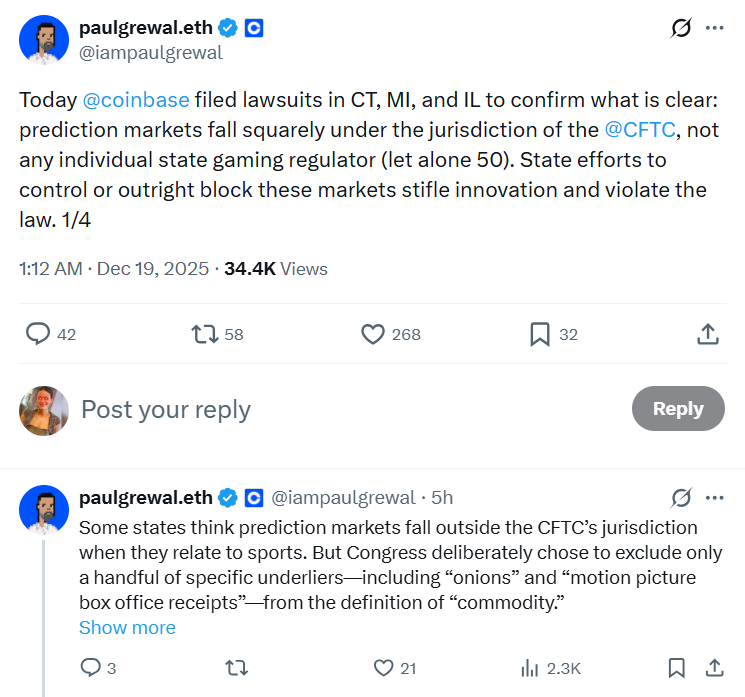
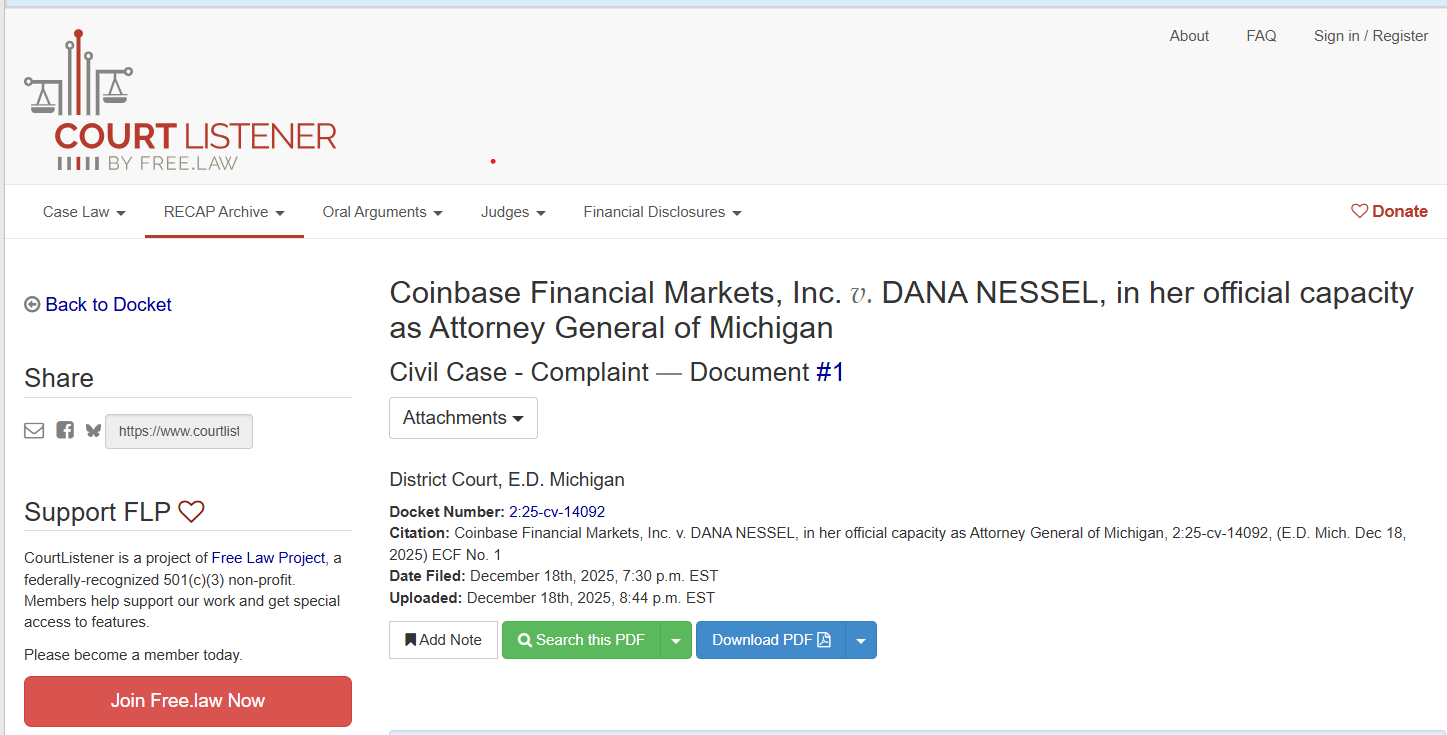
Coinbase, a major player in the cryptocurrency exchange landscape, has escalated its involvement in the burgeoning prediction market arena. The company is taking legal action against three U.S. states: Connecticut, Illinois, and Michigan. This move is designed to clarify the regulatory framework surrounding its planned prediction markets and, crucially, to assert federal jurisdiction over these products, effectively shielding them from potentially restrictive state gambling laws.
Mirroring Kalshi‘s Strategy
This legal maneuver closely mirrors the playbook of Kalshi, a CFTC-regulated platform already operating event contracts. Kalshi has navigated a complex legal landscape, battling state regulators over the categorization of its offerings. The outcomes of Kalshi‘s cases have been mixed, with some states asserting their right to regulate such markets as gambling, while others have recognized the CFTC‘s jurisdiction. Coinbase appears to be aiming for a more consistent regulatory environment to foster the growth of its own prediction market initiatives.
The Core of the Legal Argument
At the heart of Coinbase’s legal argument lies a challenge to the existing interpretation of federalism. The company contends that if individual states can independently classify federally-regulated prediction markets as illegal gambling, the most stringent state regulations would effectively become the national standard. This would, in their view, undermine the established federal regulatory framework under the Commodity Exchange Act (CEA). Coinbase is emphasizing that the CFTC has exclusive jurisdiction, not individual state gaming regulators.
Defining ‘Commodity’ and Distinguishing Features
Coinbase‘s legal strategy also focuses on how Congress defined “commodity” in the CEA. It argues that lawmakers only explicitly excluded a few specific underliers. Coinbase also highlights a crucial distinction between prediction markets and traditional gambling platforms. Unlike casinos, prediction markets function as neutral matching engines, pairing buyers and sellers without taking a position or profiting from user losses. They are not incentivized to influence the outcome.
Potential Implications and the Future of Prediction Markets
This legal challenge carries significant implications for the future of prediction markets in the United States. A favorable outcome for Coinbase could establish a clear path for regulated growth, fostering innovation and potentially attracting institutional investors. Conversely, a ruling that subjects these markets to state gambling laws could severely restrict their accessibility and functionality. The combined legal efforts of Coinbase and Kalshi will likely force federal courts to definitively answer the crucial question: are prediction markets financial instruments or gambling products? The answer will undoubtedly shape the future landscape of this emerging market segment.