Hoskinson’s Skepticism on the CLARITY Act
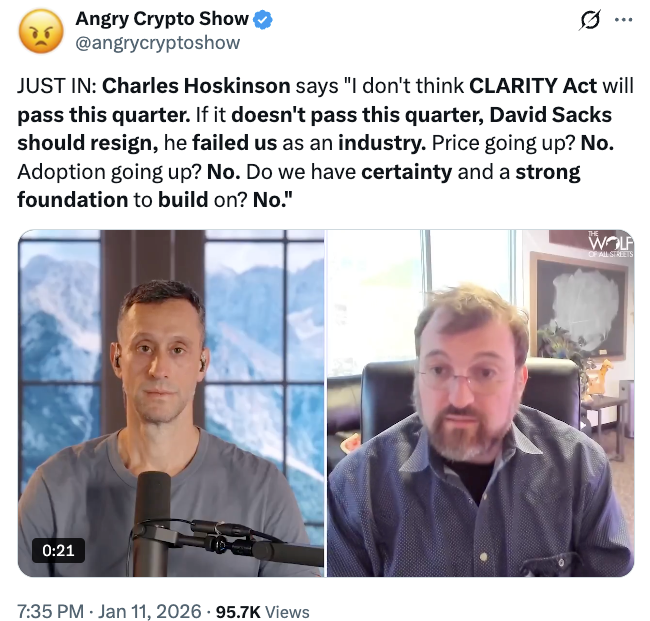
Cardano founder Charles Hoskinson has voiced strong concerns about the trajectory of the CLARITY Act, a pivotal piece of legislation currently navigating the US regulatory landscape. In a recent interview, Hoskinson expressed doubts that the act would be passed within the current quarter, highlighting the potential for political headwinds and the impact of upcoming elections on its fate. His skepticism underscores a broader unease within the crypto community regarding the pace and direction of regulatory efforts.

Criticism of US Crypto Strategy
Beyond the timeline concerns, Hoskinson launched a direct criticism of the current regulatory framework, particularly its perceived alignment with established financial institutions. He singled out David Sacks, Donald Trump‘s crypto advisor, for what he considers a failure to effectively guide the industry, citing factors such as declining crypto valuations and the lack of clear regulatory guidelines. Hoskinson’s stance highlights a common sentiment: the belief that current regulations may unintentionally stifle innovation and favor traditional financial powerhouses.
The CLARITY Act Under Scrutiny
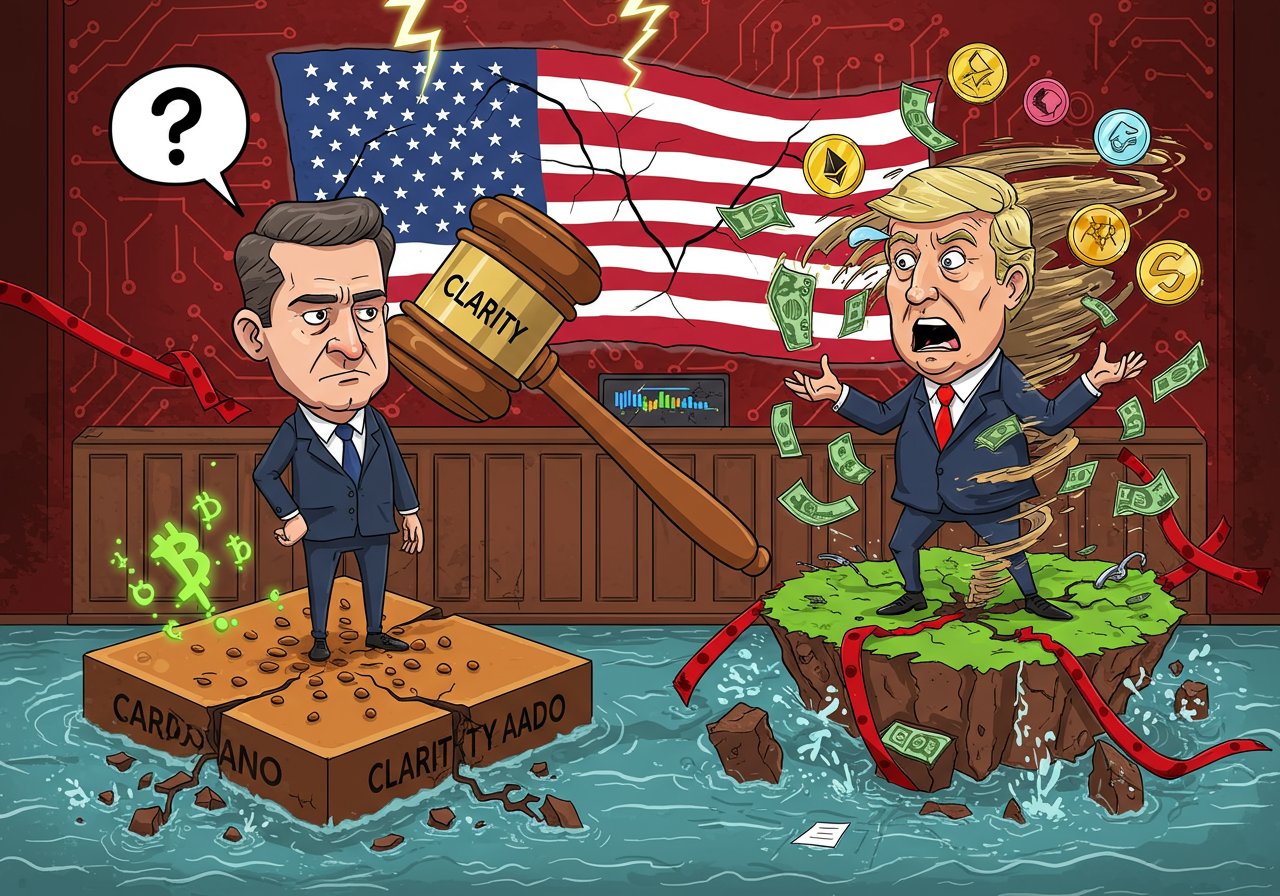
The CLARITY Act, designed to clarify regulatory roles concerning digital assets between the SEC and the CFTC, has faced scrutiny from various perspectives. While proponents laud its potential to bring much-needed clarity, critics worry about the potential for unintended consequences or its preferential treatment towards specific players within the industry. Hoskinson’s comments add a layer of complexity to this ongoing debate.
Regulatory Concerns and Future Implications
Hoskinson pointed out that the current regulatory landscape may not be conducive for the long-term success of the industry. The potential for the US to develop its own crypto-specific initiatives, separate from the global crypto community, is a core concern. He warned against the concept of an “American crypto,” which he argued could undermine the core principles of decentralization and global accessibility that underpin the crypto ecosystem. Hoskinson’s view reflects the belief that regulations should foster innovation and protect the interests of all participants, not just established financial entities.
Call to Action and the Road Ahead
Ultimately, Hoskinson’s remarks represent a call to action for both the industry and policymakers. He stressed the importance of collaborative, carefully considered regulations that prioritize long-term sustainability over short-term political gains. The future of crypto regulations in the US, and globally, will be profoundly shaped by the ongoing dialogue and the willingness of stakeholders to work together. Hoskinson’s intervention is a timely reminder of the stakes involved.