
A Tale of Deception: The $282 Million Crypto Heist
The cryptocurrency world has been rocked by one of the largest social engineering attacks in its history, resulting in a staggering $282 million loss. The victim, lured by an elaborate scheme, fell prey to an attacker impersonating Trezor support, ultimately revealing the critical seed phrase that unlocked access to their digital fortune.
The Anatomy of the Attack
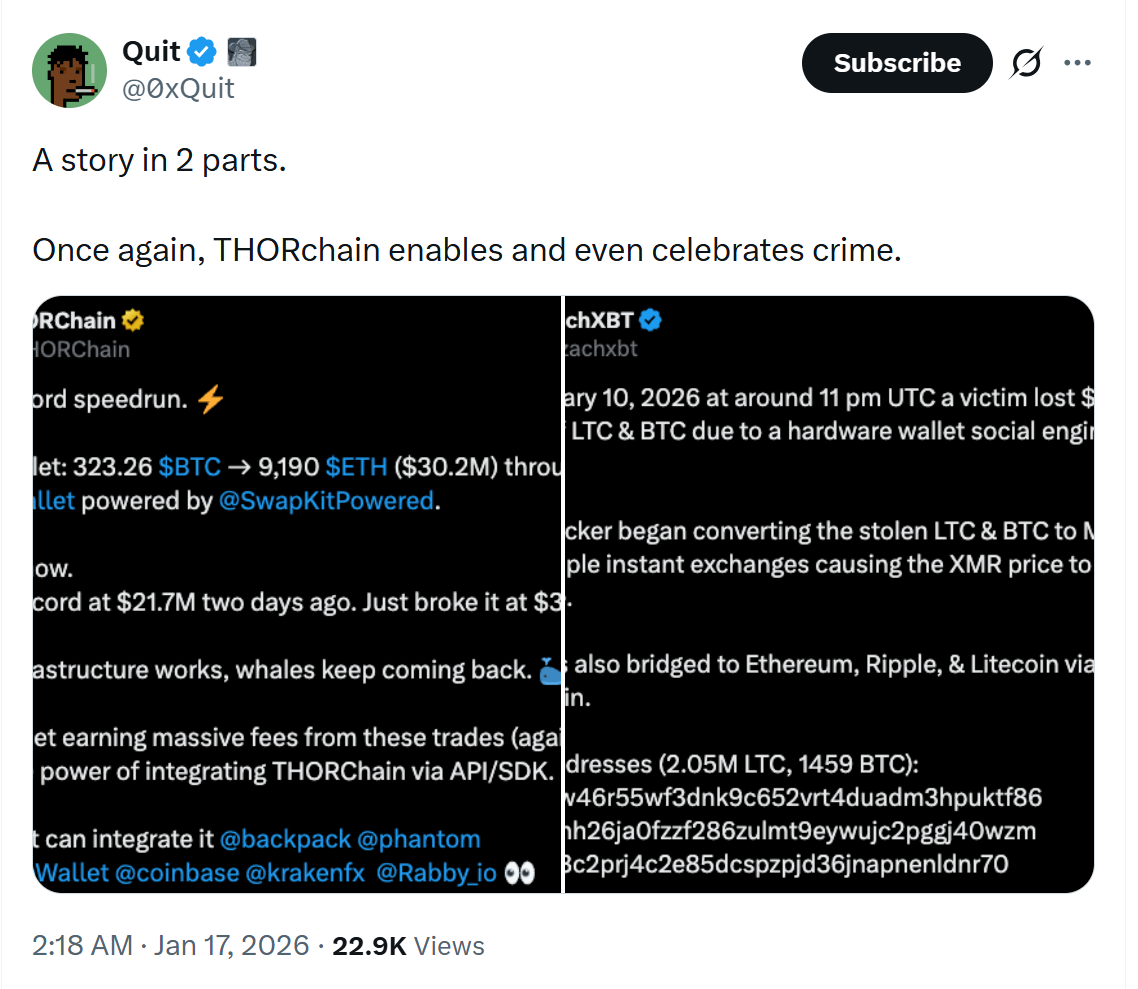
According to blockchain investigator ZachXBT, the attack occurred on January 10, 2026. The attacker, posing as Trezor support, skillfully deceived the victim, prompting them to share their seed phrase – the digital key to their Bitcoin and Litecoin holdings. Once in possession of this key, the attacker swiftly gained control of the wallet, initiating a rapid transfer of funds across multiple networks to obscure the trail.
The Stolen Assets and the Laundering Process
The stolen assets comprised a substantial amount of both Bitcoin (BTC) and Litecoin (LTC). Specifically, 2.05 million LTC, valued at approximately $153 million, and 1,459 BTC, worth around $139 million, were drained. The attacker immediately began converting these assets into Monero (XMR), a privacy-focused cryptocurrency, utilizing several instant exchange services. This conversion triggered a notable surge in XMR’s price, highlighting the immediate impact of such large-scale transactions on the market.
Furthermore, the attacker employed cross-chain bridging, using THORChain, to move large portions of the stolen Bitcoin across Ethereum (ETH), Ripple (XRP), and Litecoin. This strategy allowed them to shift value between different blockchains, circumventing the need for centralized exchanges and further complicating tracking efforts.
The Ripple Effect and Security Concerns
The attack has reignited the debate surrounding the security of decentralized cross-chain infrastructure and its potential vulnerability to exploitation during large-scale thefts. The incident highlights the critical importance of secure storage practices, robust user education, and vigilance against phishing scams.
Efforts to Recover Stolen Funds
Security firm ZeroShadow reported that it was able to trace and flag a portion of the stolen funds in real-time. Roughly $700,000 worth of funds were reportedly frozen before they could be fully converted into privacy-focused assets. This proactive measure demonstrates the evolving capabilities of blockchain monitoring and security firms in responding to such attacks.
A Recurring Theme: Social Engineering
This incident mirrors a similar $330 million Bitcoin theft from the previous year, underscoring the prevalence of social engineering as a primary attack vector in the crypto space. The ability to manipulate individuals into revealing sensitive information remains a significant threat to digital asset security.
Key Takeaways
- Always be vigilant against phishing attempts and impersonation scams.
- Never share your seed phrase with anyone, regardless of their purported affiliation.
- Utilize hardware wallets and practice proper key management.
- Stay informed about emerging security threats and best practices.
The $282 million heist serves as a stark reminder of the sophisticated tactics employed by cybercriminals and the crucial need for ongoing security awareness and proactive measures to protect digital assets.