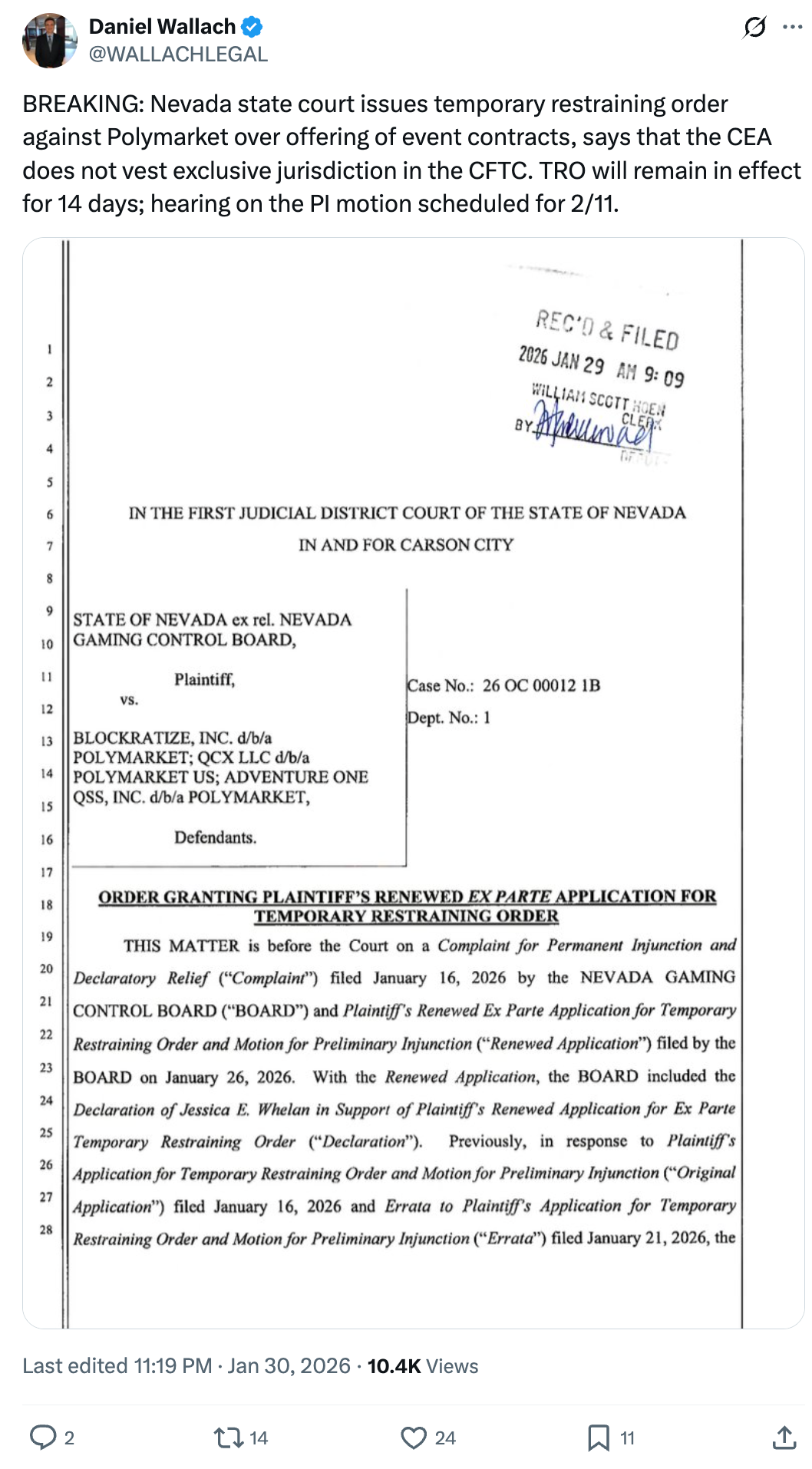
Nevada Court’s Blow to Polymarket: A Test of Regulatory Power
The burgeoning world of crypto-based prediction markets has hit a significant legal snag. A Nevada judge has issued a temporary restraining order (TRO) against Polymarket, a prominent platform, effectively halting its operations within the state. This legal maneuver isn’t just a localized issue; it’s a direct challenge to the Commodity Futures Trading Commission’s (CFTC) perceived regulatory dominance and the very structure of the crypto prediction market landscape.

The Core of the Dispute: State vs. Federal Jurisdiction
At the heart of the matter lies a fundamental disagreement over jurisdiction. Polymarket, like other prediction market platforms, argues that its event contracts fall under the purview of federal commodities law, granting the CFTC exclusive regulatory authority. However, the Nevada Gaming Control Board disagrees, asserting that these contracts constitute unlicensed wagering, subject to state gambling regulations. The judge’s initial ruling leans towards the latter, citing potential harm to the state’s ability to police betting integrity and other consumer protection measures.
Implications for the Broader Crypto Ecosystem
This case has ramifications far beyond Nevada‘s borders. It highlights a growing trend of states pushing back against the notion that federal agencies, like the CFTC, have absolute control over crypto-related activities. This could lead to a fragmented regulatory environment where platforms must navigate a complex web of varying state laws. Similar actions by Tennessee’s Sports Wagering Council, targeting Polymarket and other platforms, further underscore this shift towards stricter state oversight. This also impacts companies like Kalshi, who are already facing similar battles across the US.
A Pattern of Enforcement: States Taking Action
The Nevada case is not an isolated incident. Both Tennessee and Nevada‘s actions signal a broader trend of state regulators taking a closer look at prediction markets, particularly those offering sports-related event contracts. The rationale behind these moves often centers on consumer protection concerns, including age verification, responsible gaming tools, and the overall integrity of the betting process. The lack of these safeguards in some crypto-based platforms is a major point of contention for state authorities.
The CFTC‘s Role: Navigating a Shifting Landscape
The CFTC‘s role in this unfolding drama is complex. While it has asserted its authority over certain crypto derivatives, the Nevada ruling suggests that its jurisdictional claims may be tested in the courts. This case, and others like it, force the CFTC to clarify its approach and adapt to the increasing scrutiny of state regulators. The situation highlights the challenges of regulating innovative financial products within a rapidly evolving legal framework, where the lines between gambling and financial instruments are becoming increasingly blurred. The coming weeks and months will be crucial in determining the ultimate outcome, shaping the future of prediction markets within the crypto space.
Sports and gaming lawyer Daniel Wallach provided Cointelegraph with a copy of the court order. Source: Wallach