


Cross-Border Blockchain Initiative Takes Flight
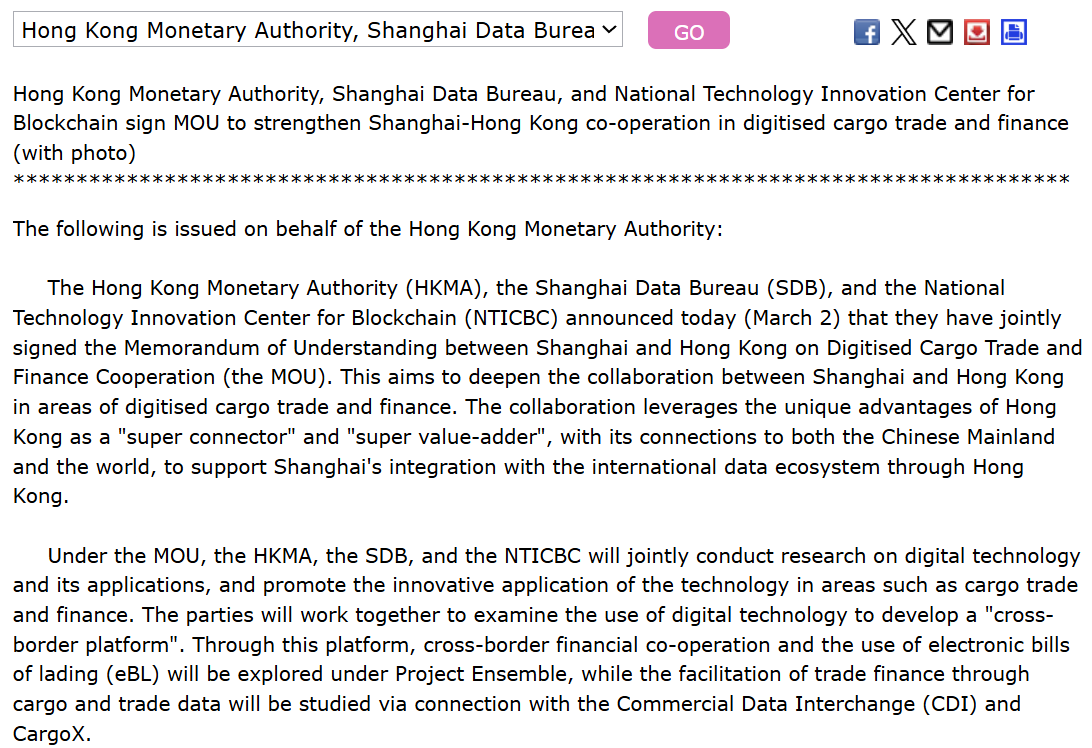
In a significant step towards digitizing international trade, the Hong Kong Monetary Authority (HKMA) and authorities in Shanghai are embarking on a collaborative project to leverage blockchain technology. The aim is to create a cross-border platform that integrates cargo trade data, electronic bills of lading, and financial applications. This initiative, formalized through a Memorandum of Understanding (MoU), signifies a deepening of cooperation between these two major financial hubs in streamlining trade finance and cargo documentation.

Project Ensemble‘s Role in Revolutionizing Trade
The project will be built upon the HKMA’s Project Ensemble, a wider effort launched in 2024 to explore tokenized market infrastructure and novel digital rails for financial services. This specific application will utilize the HKMA’s Commercial Data Interchange (CDI), a blockchain-based financial data infrastructure, to explore trade finance possibilities using commercial and cargo data. The CDI, introduced in 2022, was designed to provide institutional access to corporate data, aiming to make lending processes more efficient.
Key Players and Their Commitments
The partnership involves the HKMA, the Shanghai Data Bureau (SDB), and the National Technology Innovation Center for Blockchain (NTICBC). Howard Lee, the deputy chief executive of the HKMA, hailed the MoU as a “significant milestone” in digital innovation cooperation, emphasizing the commitment to exploring a digital infrastructure that bridges Shanghai and Hong Kong. Shao Jun, the director of SDB, echoed this sentiment, highlighting their commitment to fostering “data-powered and innovation-driven development,” with the goal of establishing a secure, efficient, and open digital infrastructure. This collaboration highlights a broader commitment to embracing digital transformation in key economic sectors.
Potential Benefits and Broader Implications
The implementation of a blockchain-based platform promises a number of advantages. These include increased transparency, reduced paperwork, faster transaction times, and enhanced security in cargo trade. The digitization of bills of lading, for example, can significantly decrease the risk of fraud and streamline the process for all parties involved. The successful implementation could serve as a blueprint for other regions looking to modernize their trade infrastructure. Moreover, the project’s success could further solidify Hong Kong and Shanghai‘s positions as leading global financial centers.
Beyond the Horizon: Digital Asset Policy in Focus
Parallel to this initiative, Hong Kong is also making strides in digital asset policy. The government is proposing tax exemptions for overseas digital assets held by investment funds and family offices, aiming to attract more investment. This demonstrates a proactive approach to fostering a favorable environment for digital asset-related activities and reinforces Hong Kong’s commitment to embracing the future of finance. The city is aiming to become a leading hub for Web3 innovation, with these policies actively facilitating its growth in the digital asset space.

