Stablecoins: A Growing Threat to Traditional Banking?
A recent report from Standard Chartered has ignited a fresh debate within the financial sector, highlighting the potential risks posed by the burgeoning stablecoin market to traditional bank deposits. The analysis, spearheaded by Geoff Kendrick, Global Head of Digital Assets Research at Standard Chartered, suggests that the increasing adoption of stablecoins could lead to a significant outflow of funds from conventional banking institutions, particularly impacting regional US banks.

The Mechanics of the Risk
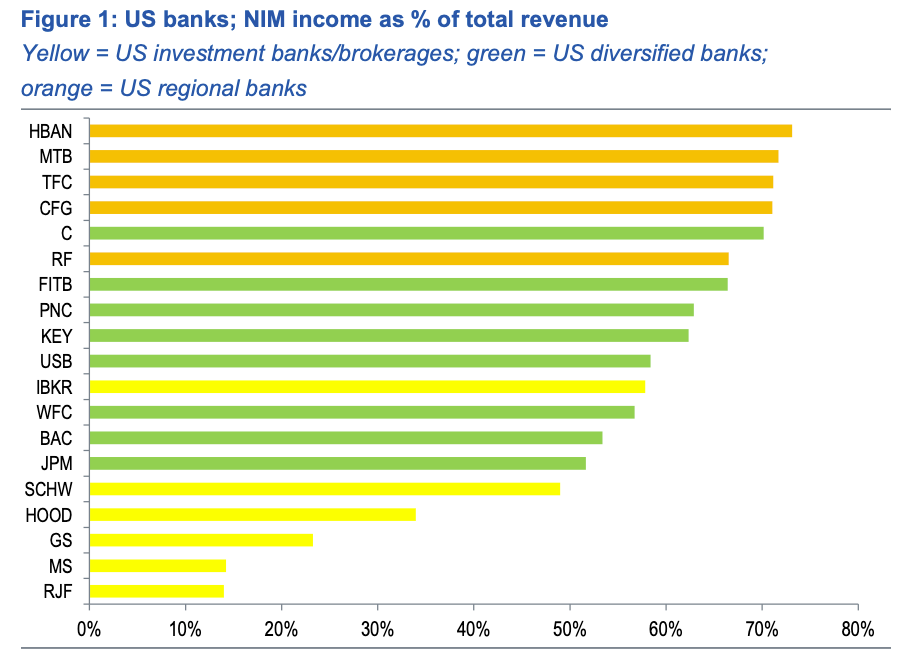
The core of the issue lies in the nature of stablecoins themselves. These digital assets, pegged to the value of a fiat currency like the US dollar, offer users the opportunity to hold value within the crypto ecosystem. However, if users choose to move their funds from bank deposits into stablecoins, the banks experience a reduction in their deposit base. This shift can directly impact a bank’s net interest margin (NIM), a crucial profitability metric.
Regional Banks: The Most Vulnerable?
According to Standard Chartered‘s analysis, regional US banks are particularly vulnerable to this trend. These institutions often rely heavily on deposits to generate revenue. The report identified several banks as being more exposed, including Huntington Bancshares, M&T Bank, Truist Financial and CFG Bank. Conversely, diversified banks and investment banks are considered less exposed due to their broader business models.
The CLARITY Act and Regulatory Uncertainty
The report also touches upon the delayed implementation of the US CLARITY Act, a piece of legislation aimed at regulating stablecoins. The delay serves as a stark reminder of the regulatory uncertainty surrounding stablecoins and the potential risks they pose. The passage of such legislation, expected by Q1 2026, could significantly alter the landscape, potentially mitigating some of the risks outlined in the report.
Tether, Circle, and the Reserve Conundrum
The report also scrutinizes the reserve practices of major stablecoin issuers. Kendrick notes that if stablecoin issuers held a significant portion of their reserves in bank deposits, the impact on the banking system would be lessened. However, data indicates that the two largest stablecoin issuers, Tether and Circle, hold a relatively small percentage of their reserves in bank deposits: 0.02% and 14.5% respectively. This means very little of the funds that leave banks are being redeposited. This situation amplifies the potential for deposit outflows.
Global Implications and Future Projections
The report extends beyond the US market, examining the global implications of stablecoin adoption. It estimates that a substantial portion of stablecoin demand originates from emerging markets. Based on a projected $2 trillion market cap, Standard Chartered forecasts that approximately $500 billion of deposits could leave developed-market banks by the end of 2028, with roughly $1 trillion exiting banks in emerging markets.
The Bigger Picture: Real-World Assets and Beyond
Finally, Kendrick acknowledges that the risks to bank deposits aren’t solely confined to stablecoins. He points to the “inevitable” expansion of real-world assets as another factor that could impact deposit levels. This suggests a broader evolution within the financial landscape, where digital assets and tokenized versions of traditional assets are reshaping how value is stored and exchanged.