


Polymarket‘s Subtle Fee Implementation
In a move that subtly reshapes its trading landscape, prediction market platform Polymarket has begun implementing taker fees on its 15-minute crypto markets. This change, which quietly appeared in updated documentation, signals a departure from the platform’s previous zero-fee model for these short-term instruments. The primary objective behind this adjustment is to bolster liquidity and provide incentives for market makers, with the fees collected being redistributed daily to liquidity providers in the form of USDC stablecoins. Unlike many other exchanges, Polymarket is not retaining the fees; they are being funneled back into the ecosystem.

Understanding the Fee Structure
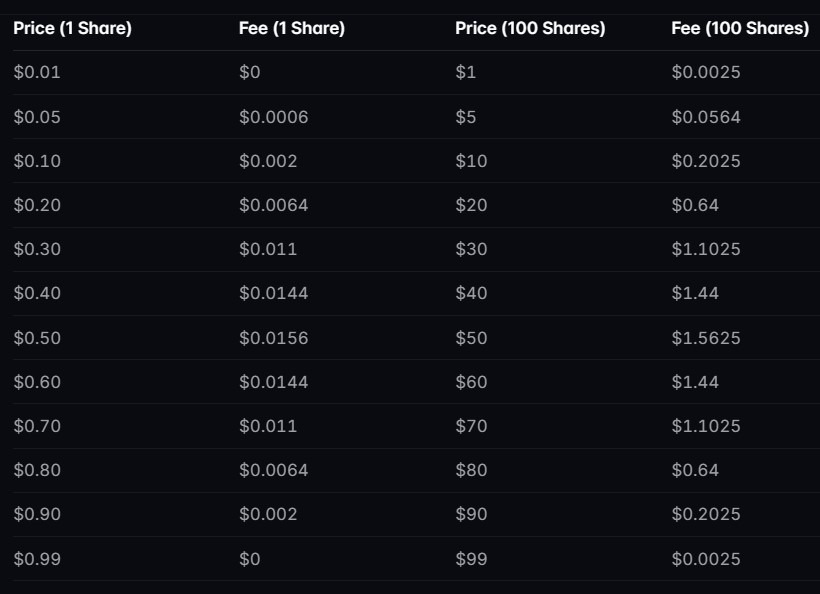
The new fee structure applies exclusively to the 15-minute crypto up/down markets, leaving the vast majority of Polymarket‘s offerings – including longer-term event markets, political markets, and non-crypto predictions – unaffected. The fee percentage varies based on market odds, with the highest charges occurring near the 50% mark. This design is intended to minimize the impact on smaller trades and directional trades, decreasing towards zero as the odds approach 0% or 100%. For example, a taker trade of 100 shares priced at $0.50 could incur a fee of approximately $1.56, which translates to a little over 3% of the trade’s total value at the peak of the curve. This nuanced approach demonstrates a thoughtful consideration of user impact.
Community Reaction and Implications
The absence of a formal announcement surrounding this update has ignited discussions within the crypto community. Many observers view this as a strategic market-structure adjustment, rather than a straightforward fee increase. Some commentators, like user 0x_opus, posit that the fees could provide increased protection against wash trading, because the fees are funneled directly to market makers. Furthermore, kiruwaaaaaa argues the change could be particularly effective against high-frequency trading bots, encouraging tighter spreads and more reliable liquidity. Others have pointed out the potential of these fees to generate a sustainable revenue stream for liquidity providers and deter bots that previously exploited the free liquidity environment.
The Broader Significance
This implementation highlights the dynamic nature of the prediction market space. Polymarket’s decision to introduce fees on a subset of its offerings underscores a commitment to refining its platform and ensuring long-term sustainability. The move towards incentivizing market makers suggests a proactive approach to maintaining robust liquidity, which is crucial for the efficient operation of prediction markets. As the platform continues to evolve, market participants will be watching to see how this impacts trading volume, price discovery, and overall user experience.
The Future of Fee Models
The move also raises interesting questions regarding the future of fee models on prediction markets and decentralized exchanges more generally. Will we see a trend towards more nuanced fee structures that account for different market dynamics and participant types? Only time will tell, but this is a space to keep an eye on.

