Binance‘s Grip on Stablecoin Liquidity: A Deep Dive
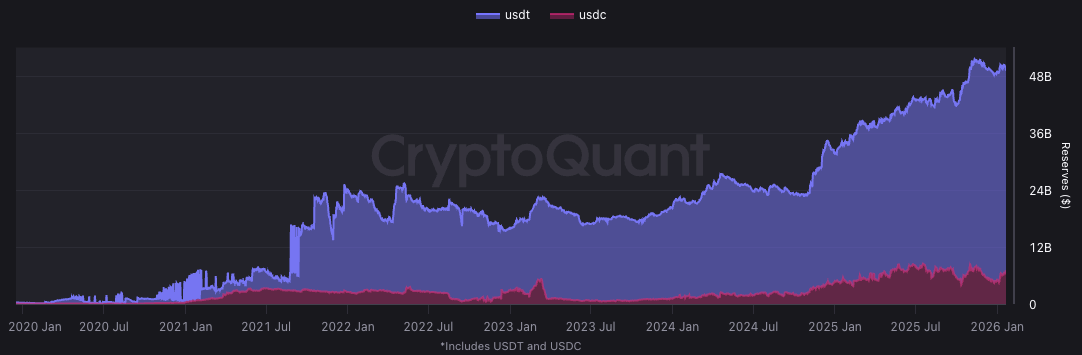
The cryptocurrency market, still navigating the choppy waters of a bear market, is showing signs of consolidation, and Binance is at the epicenter of this shift. According to recent data analysis from CryptoQuant, the leading exchange holds a staggering 65% of all stablecoin reserves across centralized exchanges (CEXs). This dominance, primarily fueled by holdings of USDT (Tether) and USDC (Circle), paints a clear picture of where liquidity is flowing – or, rather, not flowing out of – within the crypto ecosystem.
Stablecoin outflows, a key indicator of investor sentiment and capital flight, have slowed significantly. Outflows from CEXs totaled only $2 billion in the past month, a stark contrast to the $8.4 billion witnessed at the onset of the recent bear market in late 2022. This suggests that instead of a mass exodus, capital is now consolidating within the sector, with Binance emerging as the clear winner. This trend is further amplified by Binance’s significant year-over-year increase in USDT holdings, which rose by 36%, compared to relatively stable USDC reserves.
Binance: The Stablecoin King
With a whopping $47.5 billion in stablecoins under its control, Binance‘s dominance is undeniable. Of this total, $42.3 billion is held in USDT, emphasizing the stablecoin’s crucial role in Binance‘s ecosystem. Other major exchanges like OKX, Coinbase, and Bybit lag considerably behind, with OKX holding the second-largest share at 13% and $9.5 billion.
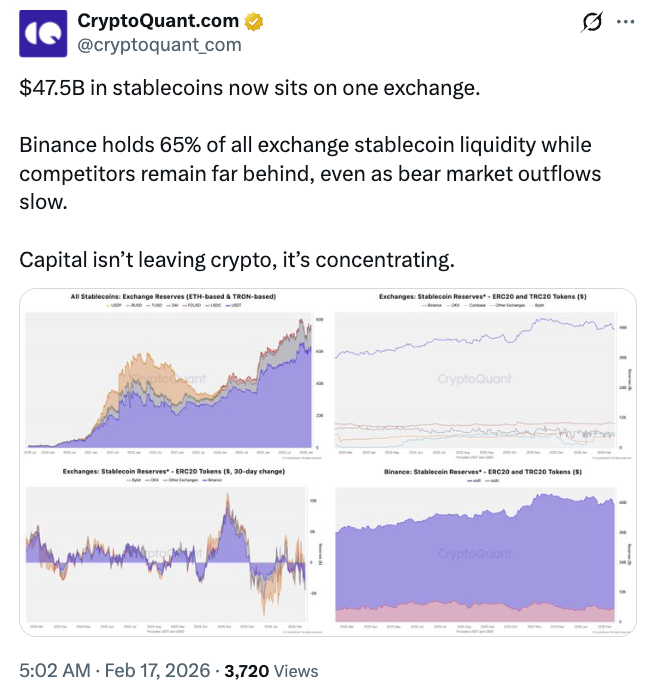
This concentration of stablecoin reserves can have significant implications. It allows Binance greater influence over market dynamics, potentially facilitating faster and more efficient trading. However, it also raises concerns about centralization and counterparty risk, particularly given the reliance on a single exchange for such a large portion of the market’s liquidity. The concentration also allows Binance to be able to offer more competitive trading pairs.
What Does This Mean for the Broader Market?
CryptoQuant’s analysis suggests a consolidation phase rather than outright capital flight. However, this doesn’t necessarily translate to immediate bullishness. The market’s overall sentiment remains cautious, and external factors like macroeconomic concerns and regulatory scrutiny continue to cast a shadow over the crypto landscape. The market’s ability to bounce out of this downturn might still be tied to new money coming in or being deployed into risk assets, as indicated by the analysis.