


Bitcoin‘s Week: Tariffs, Volatility, and the Liquidity Hunt
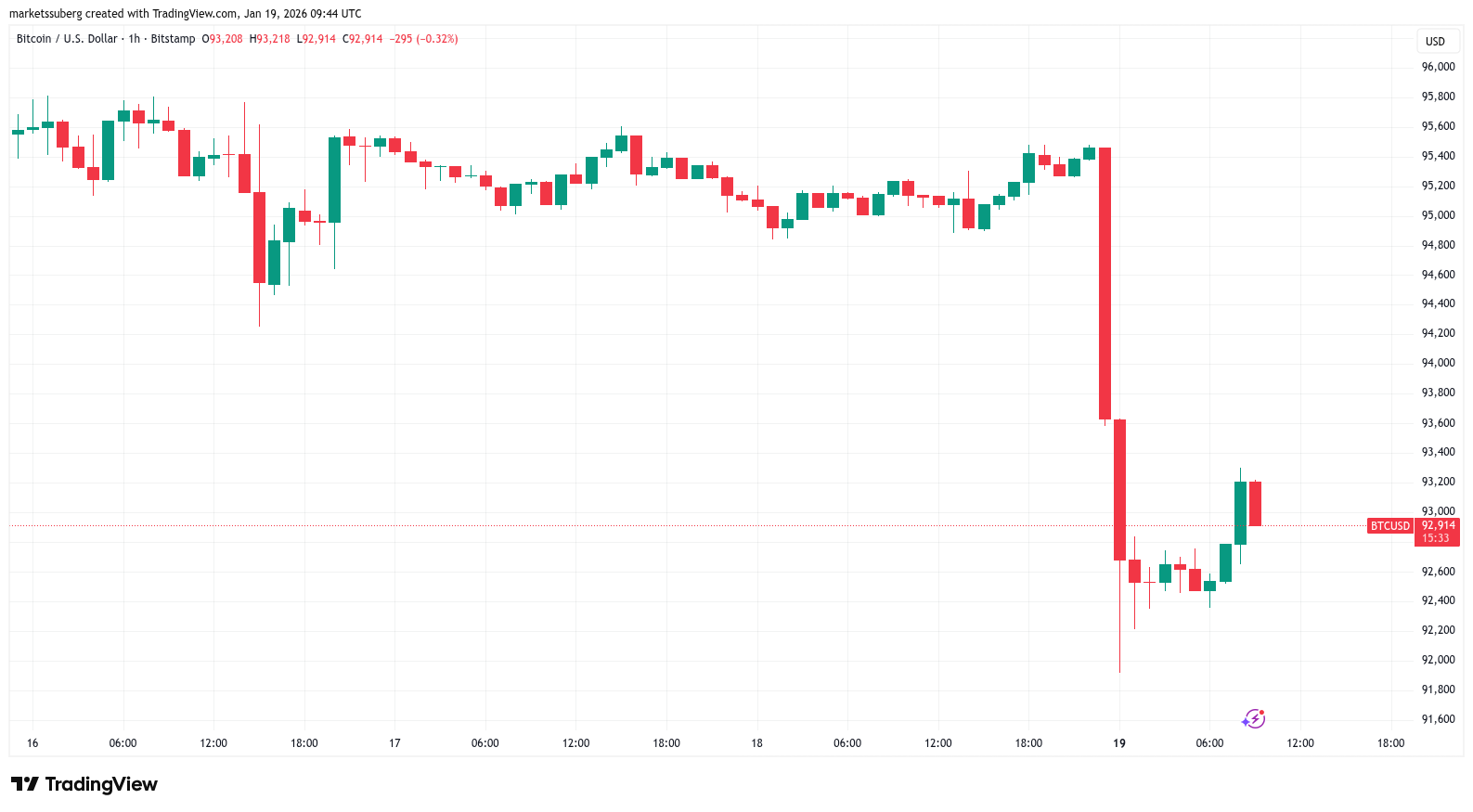
The world of Bitcoin finds itself at a crossroads. As the new week begins, the specter of renewed trade tensions hangs over the market, threatening to transform Bitcoin‘s recent gains into a ‘liquidity grab.’ This situation presents both risks and opportunities for investors. The US-EU trade spat, fueled by tariffs, is injecting uncertainty into global markets, a factor historically correlated with Bitcoin price dips. While the immediate reaction saw Bitcoin briefly dip, the potential for a deeper correction looms, with crucial support levels now in focus.

The Tariff Playbook: Uncertainty and Market Reactions
The resurgence of trade tariffs, particularly between the US and EU, is causing ripples across financial markets. Historical precedent suggests that markets will experience an initial sell-off, but the long-term impact may be less severe. Analysts point to the cyclical nature of these trade disputes, with an initial period of volatility followed by a potential easing of tensions and renewed market confidence. The implementation of tariffs on countries like Denmark, Norway, Sweden, and others has the potential to trigger market reactions similar to those seen in 2025. It’s a familiar pattern, and one that requires careful navigation by crypto investors.
Support Levels and Liquidity: Where Does Bitcoin Go?
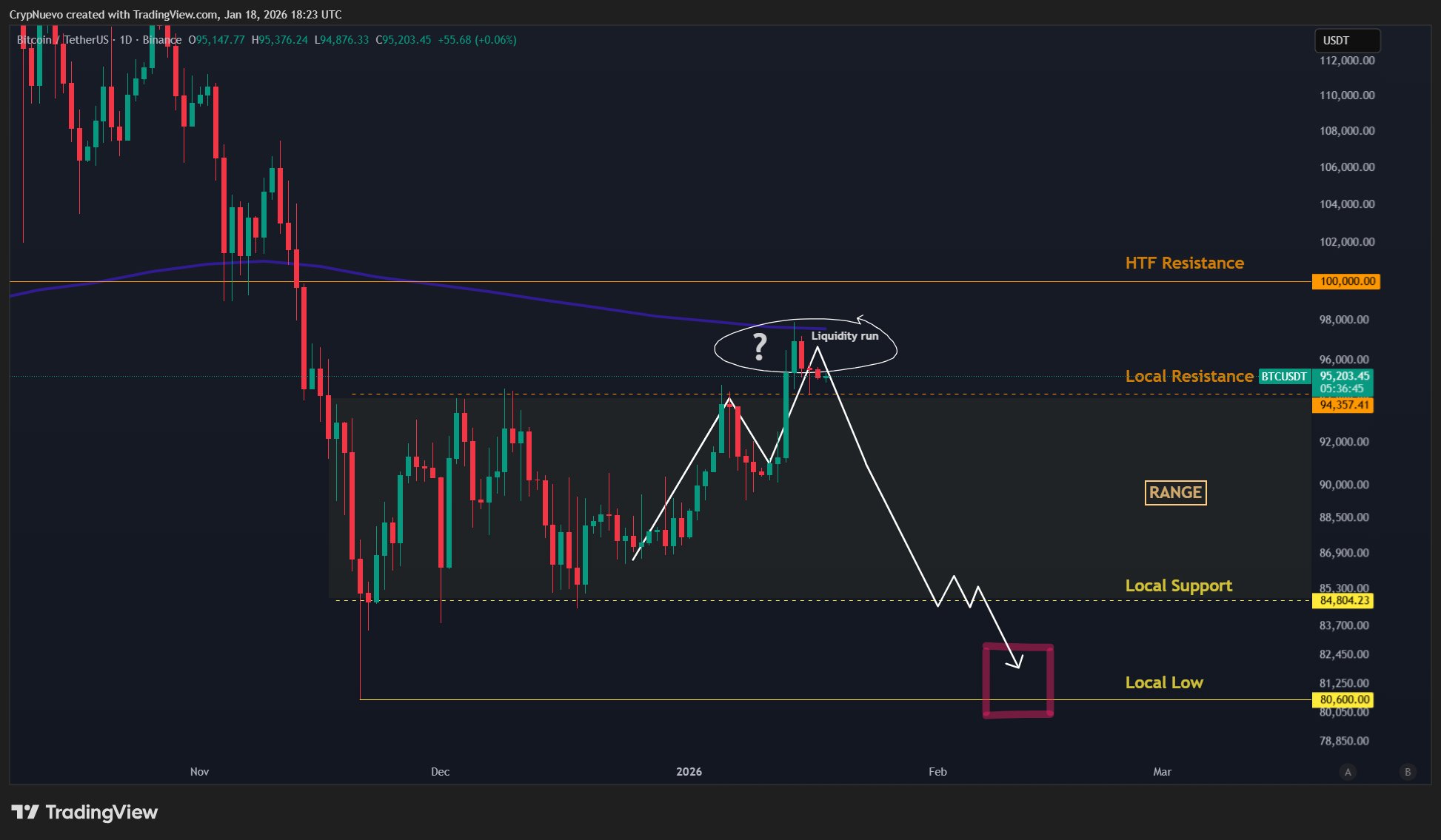
Bitcoin‘s immediate price action is being closely watched for signs of potential downside pressure. Key support levels, including the 2026 yearly open around $87,000 and range lows at $80,500, are now targets for traders. The potential for a ‘shakeout’ that pushes the price towards these lows is a distinct possibility. Moreover, the increasing liquidation of long positions below the yearly open suggests that a liquidity run lower could be in the cards, adding another layer of complexity to the analysis.
Gold and Silver‘s Ascent: A Safe Haven Play?
While Bitcoin navigates the choppy waters of trade war uncertainty, precious metals are seizing the opportunity to shine. Gold has approached $7,000 per ounce, hitting fresh all-time highs, with silver also enjoying a similar surge. This divergence in performance highlights the potential of gold and silver as safe-haven assets during times of economic instability. The question now becomes whether Bitcoin will follow suit.
Beyond Tariffs: Macroeconomic Data and the Fed
Beyond the immediate impact of tariffs, traders will be closely monitoring upcoming US macroeconomic data, including the Federal Reserve’s preferred inflation gauge, the Personal Consumption Expenditures (PCE) index. This data, alongside initial jobless claims and GDP revisions, will provide further insights into the health of the US economy. The Federal Reserve’s stance on interest rates remains a crucial factor. Despite the mixed inflation signals, the Fed is expected to hold rates steady, which offers no immediate relief for crypto and risk assets.
A Structural Shift? On-Chain Data Signals
Despite the potential headwinds, some analysts point to positive developments in the underlying market structure. On-chain data indicates a shift towards buyer-driven activity in the spot market, suggesting that the current rebound is not solely a leverage-driven phenomenon. This, along with a decrease in open interest in derivatives, signals a slow return of risk appetite, potentially setting the stage for a sustainable uptrend. This ‘structurally healthy’ uptrend contrasts with the previous quarter, adding a layer of optimism to the market analysis.
Conclusion: Navigating the Uncertainty
The coming weeks will be crucial for Bitcoin. While the immediate future remains uncertain, the market’s response to trade tensions, the performance of precious metals, and the release of key macroeconomic data will shape Bitcoin‘s trajectory. Investors should stay informed, monitor key support levels, and remain vigilant in the face of evolving market conditions.

