


IBIT‘s Surprising Success: Inflows Despite Losses
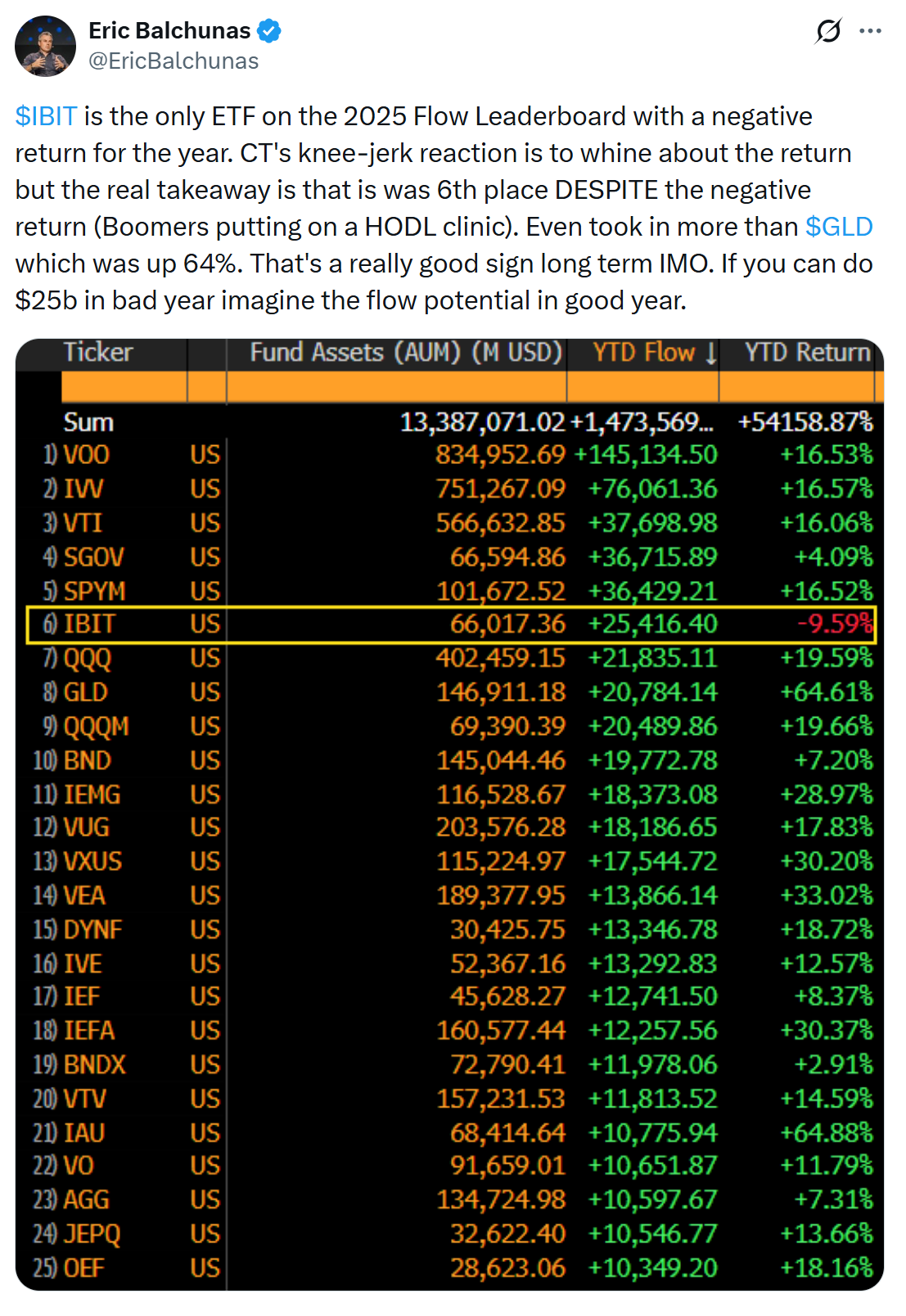
BlackRock‘s iShares Bitcoin Trust (IBIT) is making waves in the ETF landscape, not just for its size, but also for its performance in a challenging market. Despite experiencing negative returns for the year, IBIT has managed to rank sixth in terms of net inflows. This is a remarkable feat, especially when compared to other ETFs, particularly those in the traditional equity and bond markets which have seen positive returns and yet, in some cases, less capital influx.
Investor Sentiment and Long-Term Perspective
The data, compiled by Bloomberg ETF analyst Eric Balchunas, shows IBIT attracting approximately $25 billion in year-to-date inflows. This impressive figure suggests a strong underlying conviction among investors, who appear to be less swayed by short-term price fluctuations and more focused on the long-term potential of Bitcoin. Balchunas’s observation that this is “a really good sign” resonates with seasoned crypto investors who understand the cyclical nature of the market. He emphasizes that if such substantial inflows can be achieved during a down year, the potential for inflows in a positive market environment is even greater. This also potentially indicates a ‘HODL clinic’ mentality, with long-term investors adding to their holdings regardless of immediate price action.
Decoding the ETF Dynamics
The situation presents a nuanced view of the crypto market. While some may question why sustained institutional buying through ETFs isn’t translating to significantly higher Bitcoin prices, others suggest a maturing market dynamic. Early investors are taking profits and deploying income strategies, potentially influencing price trends. Bitcoin‘s impressive gains in the previous year also contribute to the current market behavior, tempering expectations of continuous, exponential growth. It’s important to recognize that this is an evolving landscape where traditional market principles begin to overlay onto the new asset class of crypto.
Outflows and Future Prospects
Recent market activity has shown mixed signals. While IBIT demonstrated inflows, other Bitcoin ETFs saw outflows. Meanwhile, Ether (ETH) ETFs experienced a streak of consecutive outflows. BlackRock executives remain optimistic. At a recent conference, the firm’s business development director highlighted that their Bitcoin ETFs have become major revenue generators. He reiterated that capital allocation and cash-flow management are primary goals of ETFs, making periods of compression and outflows entirely normal. This reinforces BlackRock‘s long-term commitment to the Bitcoin ETF space.
Conclusion: A Bullish Signal?
IBIT‘s performance, marked by substantial inflows despite negative returns, presents a compelling narrative. It signals enduring investor faith in Bitcoin‘s long-term viability, even amidst market volatility. This behavior underscores the importance of examining investor sentiment and portfolio strategies beyond immediate price movements. As the crypto market evolves, the actions of institutional players like BlackRock, and the resulting ETF flows, will remain critical indicators for evaluating the asset class’s ongoing maturation.

