

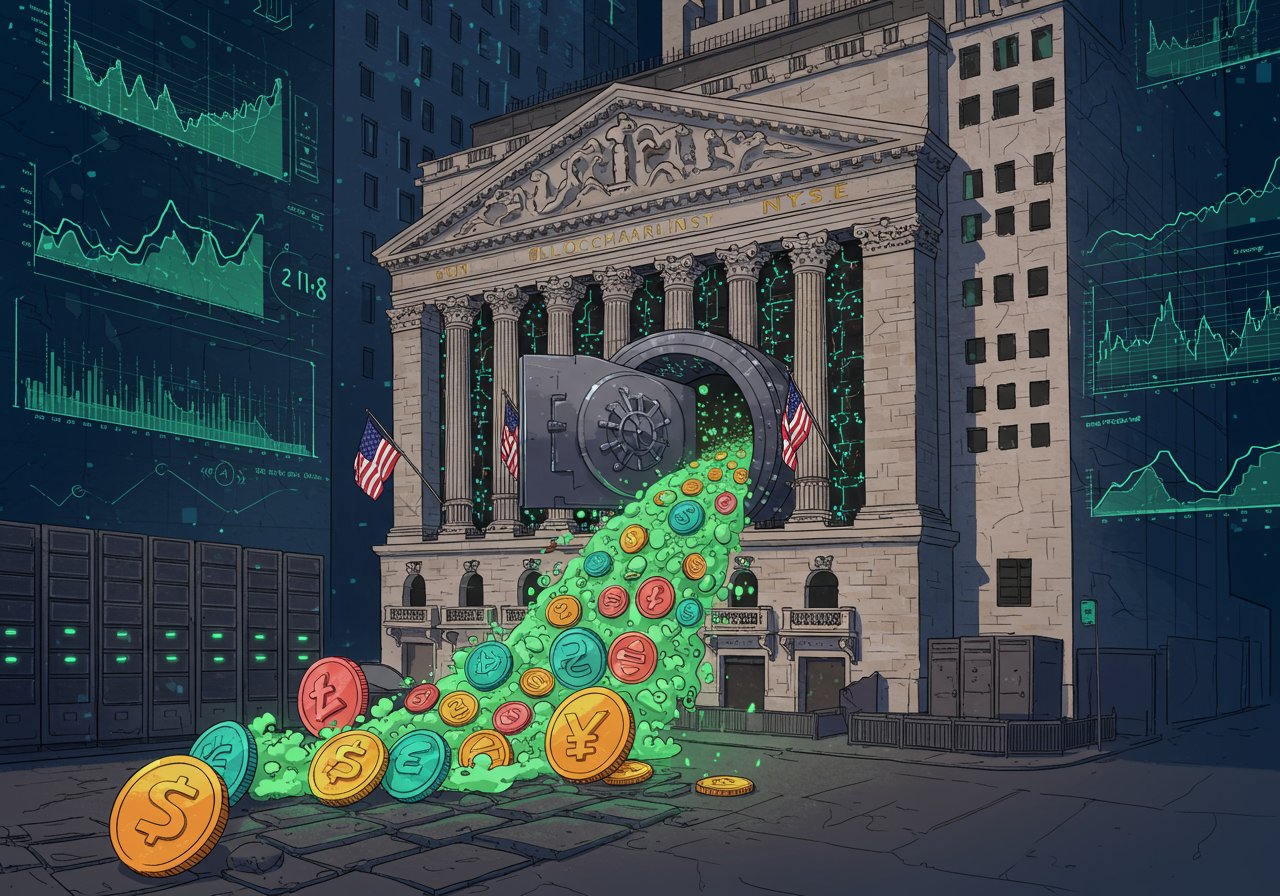
NYSE‘s Bold Venture: 24/7 Blockchain Trading Platform
The New York Stock Exchange (NYSE) is making a significant move into the digital asset space, announcing plans to develop a 24/7 blockchain trading platform for tokenized stocks and exchange-traded funds (ETFs). This initiative, spearheaded by the NYSE‘s parent company, Intercontinental Exchange (ICE), marks a pivotal moment, signaling a potential shift towards always-on, on-chain markets. This platform aims to modernize existing infrastructure, leveraging blockchain technology for settlement and potentially streamlining the trading experience.

Breaking Down the Platform’s Mechanics
The proposed platform will integrate the NYSE‘s existing Pillar matching engine with blockchain-based post-trade systems. This integration promises multi-chain support for custody and settlement, offering enhanced flexibility and accessibility. Crucially, the platform envisions real-time settlement using stablecoins, bypassing the traditional one-day settlement cycle that currently governs U.S. equity markets. Tokenized assets, representing shares of traditional stocks, will be the cornerstone of this new trading venue. This means investors could gain exposure to stock prices in a more accessible and efficient manner.
The Promise of Tokenization and Extended Trading Hours
Tokenization itself offers several advantages, including 24/7 accessibility and the ability to trade fractional shares. This initiative aligns with the NYSE‘s broader strategy to extend trading hours, catering to global demand for U.S. equities. The exchange previously announced plans for extended weekday trading. This proactive stance echoes similar moves by tech-focused competitors, like Nasdaq, which also plans to incorporate 24-hour weekday trading. The convergence of these initiatives showcases a broader industry trend.
Regulatory Landscape and Industry Impact
However, the platform’s launch is subject to regulatory approval, a critical factor shaping its eventual implementation. The NYSE‘s approach is designed to balance cutting-edge technology with established regulatory standards, emphasizing trust and security. This underscores the need for regulatory clarity and cooperation to foster the growth of on-chain markets. ICE is collaborating with major financial institutions, including BNY Mellon and Citibank, to support tokenized deposits across its clearinghouses. This collaboration is designed to manage funds outside traditional banking hours.
What’s Next for the Future of Finance?
This initiative represents a significant step towards the future of finance, with the potential to transform how stocks and ETFs are traded. Michael Blaugrund, ICE’s vice president of strategic initiatives, calls supporting tokenized securities a “pivotal step.” This could influence capital formation. The NYSE‘s venture signals a willingness to embrace blockchain technology and explore fully on-chain solutions for trading and settlement, paving the way for a more globalized, accessible, and potentially more efficient financial ecosystem. Whether this new system will be accepted by regulators will define its future.

