

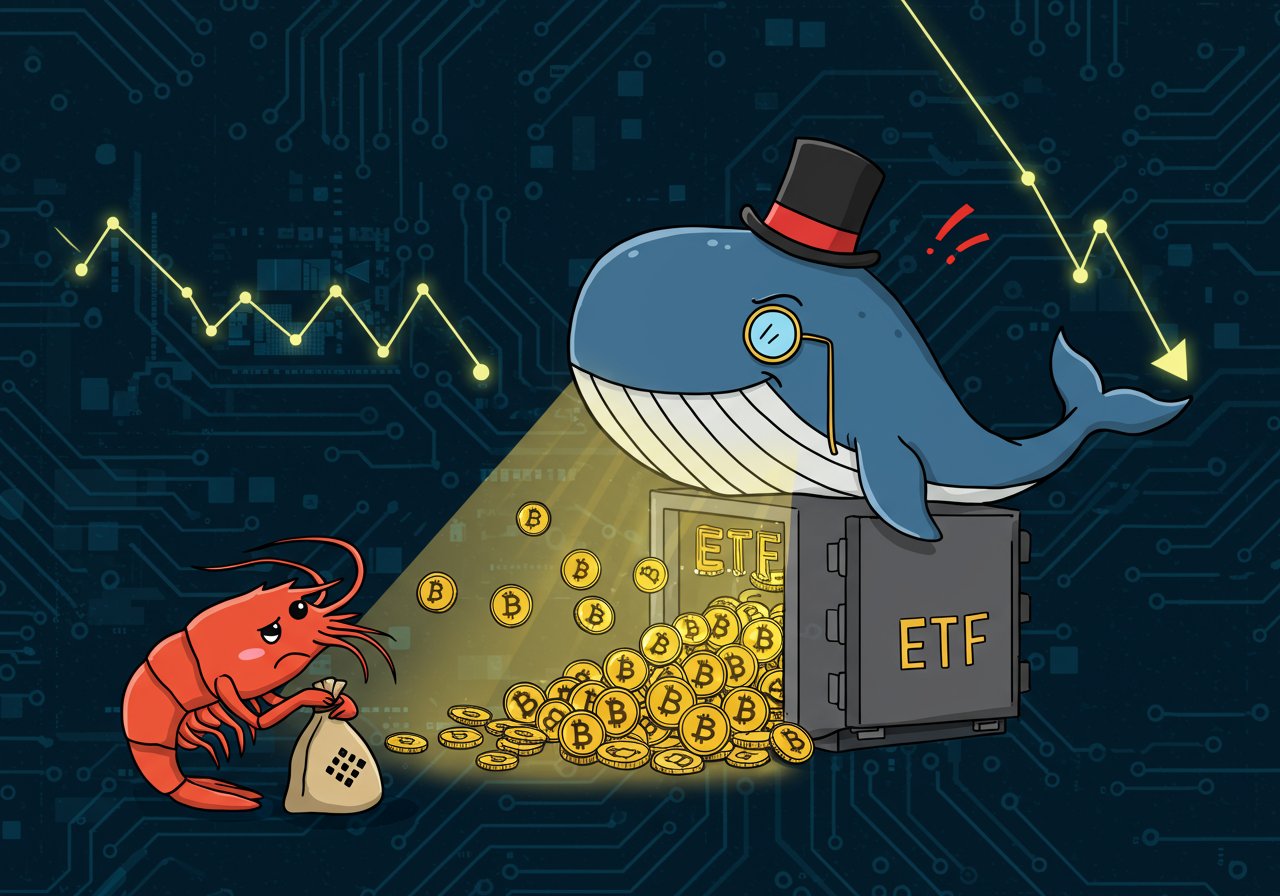
Shrimp Retreat: Retail Investors Flee Binance
The landscape of Bitcoin investment is shifting dramatically. Recent data paints a concerning picture for Binance, one of the world’s largest cryptocurrency exchanges. Bitcoin inflows from retail investors, specifically those holding less than 1 BTC, have collapsed to levels not seen before, even surpassing the depths of the 2022 bear market. This ‘shrimp’ activity, as it’s known, has dwindled to a fraction of its former self, presenting a stark contrast to previous periods of market volatility.
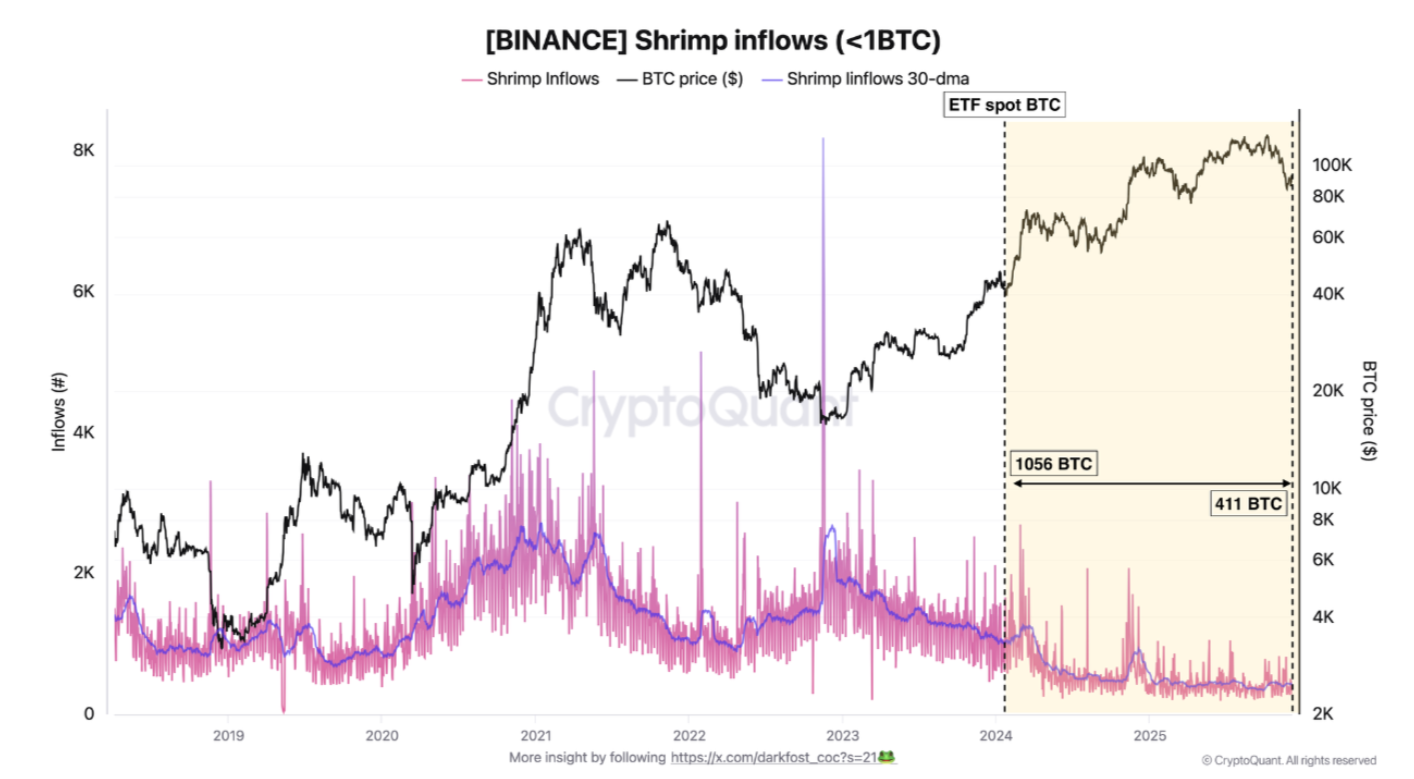
According to on-chain analytics platform CryptoQuant, the daily inflows from these smaller Bitcoin holders have plummeted. In December 2022, inflows averaged approximately 2,675 BTC daily. Today, that figure has plummeted to a mere 411 BTC, representing a significant structural decline in retail participation. This trend is not merely a temporary pullback; it appears to be a sustained shift in investor behavior, with serious implications for the broader market.
The ETF Effect: A Frictionless Path to Bitcoin Exposure
One of the primary drivers behind this transformation is the emergence of spot Bitcoin Exchange-Traded Funds (ETFs). These ETFs provide a simpler, more accessible avenue for investors to gain exposure to Bitcoin without the complexities of self-custody or navigating exchange platforms. As CryptoQuant‘s analysis points out, ETFs offer a ‘frictionless’ way to engage with Bitcoin, potentially drawing retail investors away from direct exchange participation.
Whales Take Center Stage: Contrasting Positions
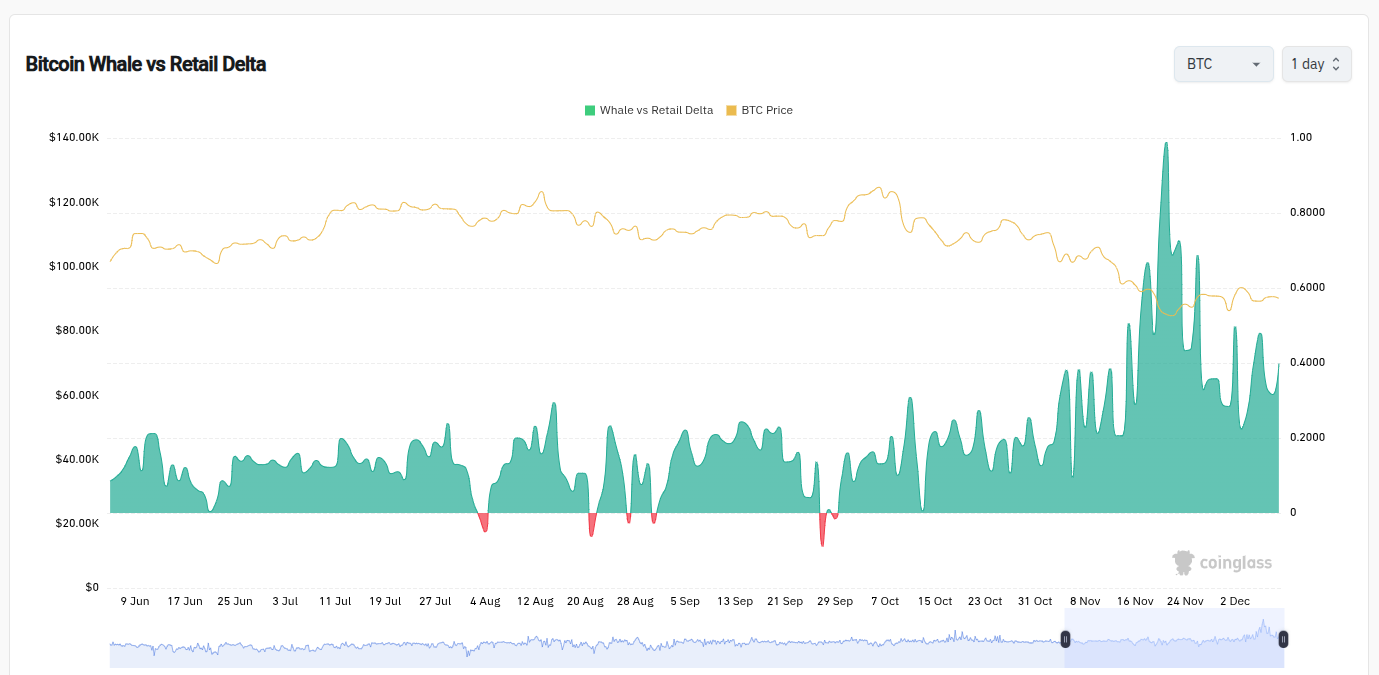
While retail investors retreat, the activity of Bitcoin whales, those holding significantly larger amounts of BTC, presents a compelling counterpoint. Data suggests that whales are heavily positioned in long positions, hinting at a potential price bottom. This divergence between retail and whale behavior is a crucial element to consider. According to Joao Wedson, founder and CEO of crypto analytics platform Alphractal, whale long positions have reached unprecedented levels compared to retail traders. “Whenever these levels got this high in the past, we saw local bottoms forming — but also large positions getting liquidated,” he noted.
Implications and Future Outlook
The decline in retail inflows to Binance raises questions about the future of exchange-based Bitcoin trading. The shift towards ETFs could mean that a larger portion of Bitcoin is now held off-exchange, potentially influencing market liquidity and price discovery. Furthermore, the interplay between retail and whale behavior warrants close attention. A continued divergence could lead to increased volatility and potential opportunities for strategic traders.
“ETFs have provided a frictionless way to gain exposure to Bitcoin without dealing with private keys, wallet security, exchange accounts or the risk of mismanaging custody,” – CryptoQuant
The current dynamics suggest a market in transition. While retail investors appear to be finding alternative ways to participate in the Bitcoin ecosystem, the actions of whales and the overall impact of ETFs will play a crucial role in shaping the future of Bitcoin‘s price trajectory. It’s a complex interplay of forces, and understanding these trends will be key for navigating the evolving crypto landscape.

