


Tokenized Gold‘s Weekend Reign: A New Era of Price Discovery
The world of gold trading is undergoing a quiet revolution, and it’s happening every weekend. While traditional futures markets, like those offered by the Chicago Mercantile Exchange (CME), take a break, tokenized gold assets are stepping into the spotlight, driving nearly all of the price discovery in the market. This shift has significant implications for how we understand and interact with gold in the digital age.

CME’s Weekend Downtime: Opportunity for Tokenized Gold
Traditional gold futures markets, a cornerstone for institutional and retail investors alike, typically close at 5:00 PM ET on Fridays and reopen at 6:00 PM ET on Sundays. During these off-hours, the pricing mechanism shifts. Regulated futures trading grinds to a halt, leaving a void. This is where tokenized gold assets, such as PAX Gold (PAXG) and Tether Gold (XAUT), come into play. These digital representations of physical gold, traded on blockchain networks, offer continuous availability, effectively becoming the primary venue for price discovery when traditional markets are dormant.
The Rise of On-Chain Markets
Iggy Ioppe, former Chief Investment Officer at Credit Suisse and now CIO at Theo, highlights the significance of this trend. “In terms of publicly visible price formation, onchain markets are responsible for virtually 100% of weekend price discovery,” he stated. Furthermore, Ioppe notes a correlation between on-chain activity and futures trading, observing how prices often align with weekend movements once CME resumes trading. This offers a unique advantage for those seeking to actively manage risk and capitalize on price fluctuations, regardless of the time of day.
Rapid Growth and Increased Adoption
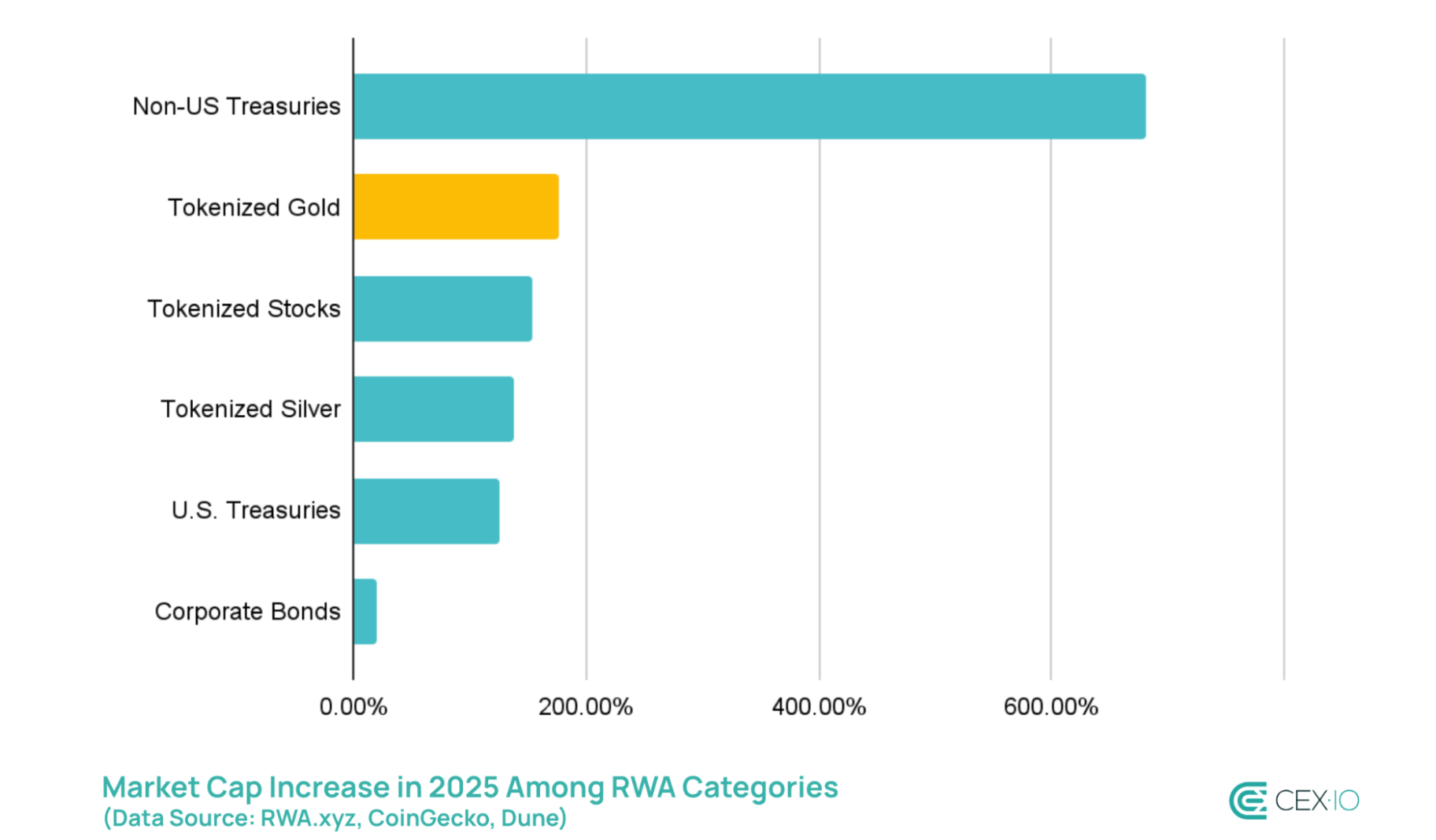
The tokenized gold market has experienced remarkable growth. In the past year, it has expanded by nearly $2.8 billion, reaching a market cap of $4.4 billion. This represents a staggering 177% increase, significantly outpacing the broader gold market and even major spot gold ETFs. The number of holders has nearly tripled, adding over 115,000 new wallets. This robust growth indicates a rising interest in tokenized gold, especially in the context of the real-world asset (RWA) sector.
Trading Volume and Market Participants
The surge in trading activity is equally impressive. In 2025, tokenized gold recorded approximately $178 billion in volume, peaking above $126 billion in the fourth quarter. This level places it as the second-largest gold investment product globally by trading volume, second only to SPDR Gold Shares. Key players in this market include market makers, cross-venue liquidity providers, and crypto-native macro traders. These participants actively arbitrage price differences and leverage tokenized gold for exposure, hedging, and yield strategies. Some institutions monitor on-chain markets closely, especially when geopolitical or macroeconomic uncertainty looms.
Geopolitical Tensions and Risk Management
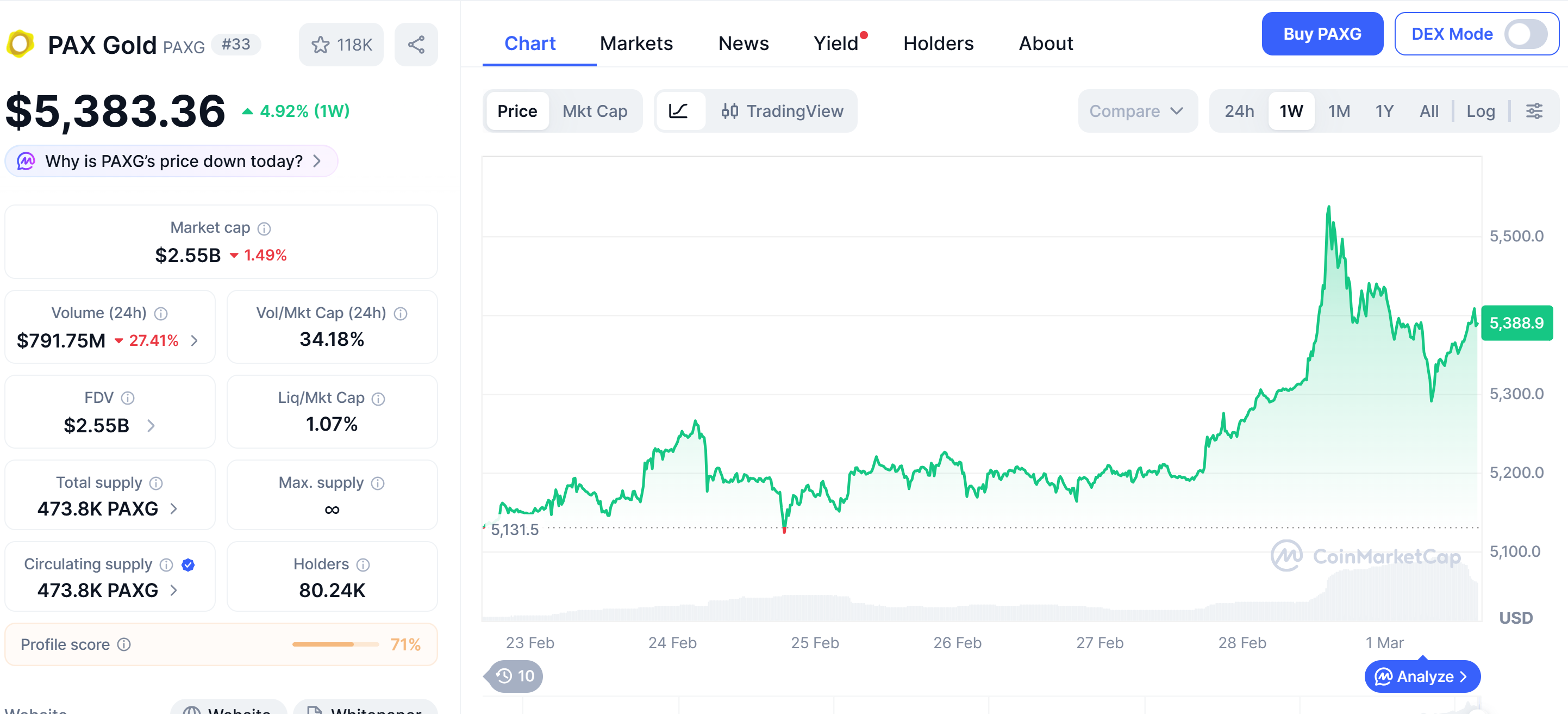
Tokenized gold offers a significant advantage in risk management due to its 24/7 trading availability. This continuous access allows investors to react immediately to geopolitical events or market movements, something impossible with traditional futures markets during the weekend. For instance, tokenized gold rallied on a Saturday following US and Israeli strikes on Iran, as investors moved into XAUT and PAXG.
Challenges and the Future
Despite its rapid growth, tokenized gold faces certain hurdles. Liquidity remains smaller compared to futures or ETFs, which could make large trades more volatile. Regulatory clarity and fragmentation also play a role in slowing institutional deployment. Custody, accounting, and capital rules vary across jurisdictions, contributing to challenges. Ioppe predicts that tokenized markets will likely co-exist with traditional markets. Each will cater to different needs, offering investors a more diverse and flexible approach to gold trading in the evolving financial landscape.
“The most likely near-term evolution is that of tokenized and traditional markets existing in parallel, each serving a different function.” – Iggy Ioppe
Ultimately, the rise of tokenized gold highlights the ongoing transformation of financial markets, driven by technological innovation and the increasing demand for accessible and flexible investment options. As the market matures and overcomes current obstacles, it is poised to play an even larger role in the global gold ecosystem.

