

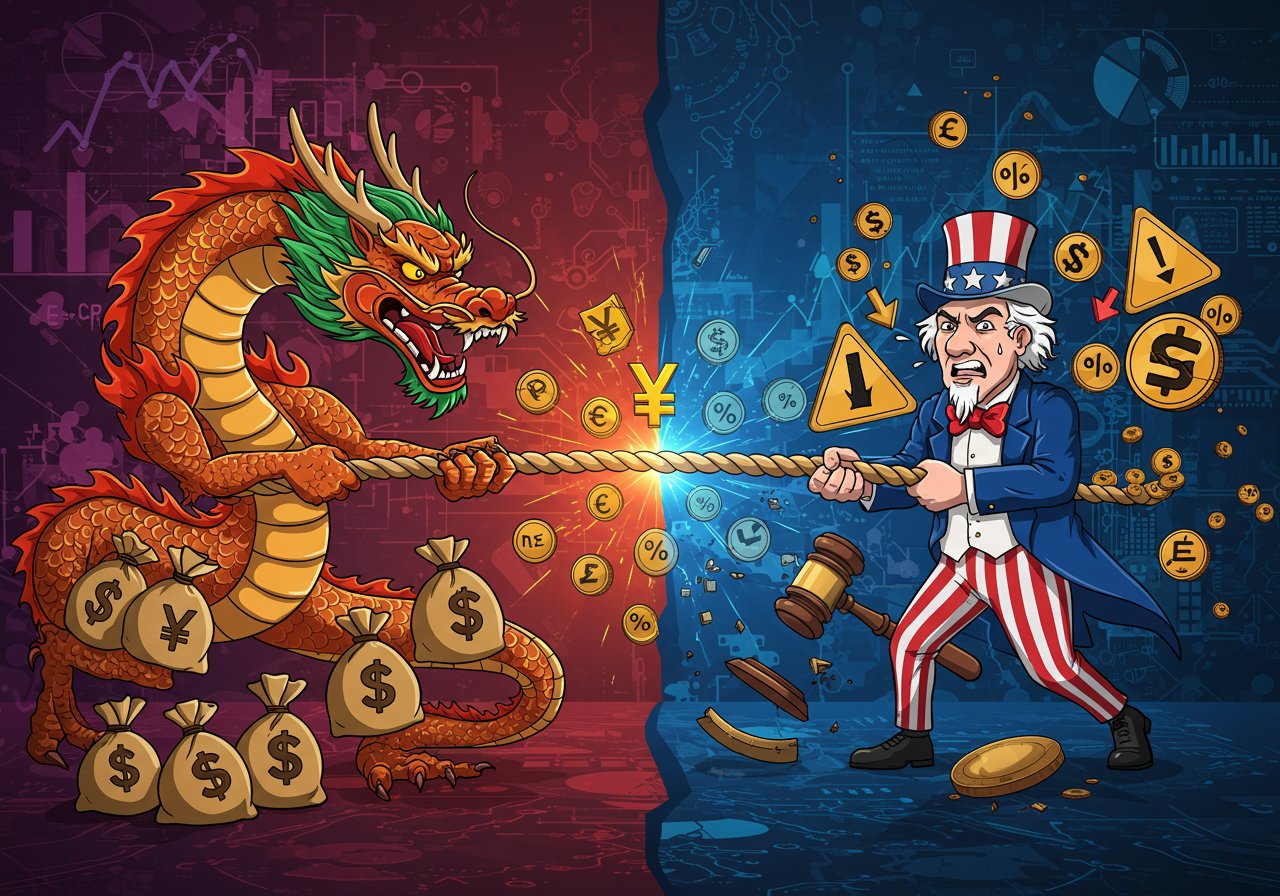
China‘s Digital Yuan: A New Era of Competition?
The People’s Bank of China‘s (PBOC) recent move to allow interest payments on digital yuan (e-CNY) holdings has sent ripples across the global financial landscape. This initiative, permitting commercial banks to offer interest on e-CNY wallets, is not merely a technical adjustment; it’s a strategic maneuver that directly challenges the current regulatory framework governing US dollar-pegged stablecoins. This is especially true considering the context of the Guiding and Establishing National Innovation for US Stablecoins (GENIUS) Act, which, among other things, prohibits stablecoin issuers from offering yields.

The GENIUS Act and the Yield Dilemma
The GENIUS Act, enacted to provide a federal framework for dollar-pegged stablecoins, specifically outlaws the payment of interest or yields. The rationale behind this restriction has been partly driven by concerns from traditional banking institutions that stablecoin yields could divert deposits away from their systems, particularly impacting smaller lenders. However, this prohibition now places US stablecoins at a perceived disadvantage, especially in light of China‘s recent e-CNY policy. Coinbase CEO Brian Armstrong, among others, has voiced concerns that this disparity creates a significant competitive edge for the e-CNY, potentially undermining the long-term competitiveness of US stablecoins.
A weaker dollar, for instance, might incentivize US lawmakers to view dollar-denominated stablecoins as tools to preserve the dollar’s global dominance. This could potentially accelerate regulatory clarity for compliant US dollar stablecoins.

The core value proposition of stablecoins is also evolving, with a growing emphasis on preserving purchasing power and, crucially, combating inflation, which may drive demand for stablecoins backed by real-world assets and structures designed to share yields with users.
Political and Regulatory Uncertainties
Looking ahead, the potential impact of the 2026 midterm elections on crypto policy is also a point of considerable discussion. While a complete repeal of the GENIUS Act seems unlikely, shifts in congressional control could influence broader market structure bills and the enforcement practices of regulatory bodies like the Securities and Exchange Commission (SEC) and the Commodity Futures Trading Commission (CFTC). Digital asset firms are already operating within an environment of regulatory uncertainty, and strategic foresight is crucial. Crypto companies, according to many legal experts, should proactively document their compliance and remain adaptable to potential shifts in regulatory enforcement, particularly given China‘s increasing prominence in the digital currency arena.
Key Takeaways
- China’s interest-bearing e-CNY could pose a competitive challenge to US stablecoins.
- The GENIUS Act‘s ban on yields creates a disadvantage for US stablecoins.
- Regulatory clarity and evolving stablecoin designs are reshaping the market.
- Political shifts may influence the future of crypto policy and enforcement.
These developments highlight the dynamic and evolving nature of the digital currency landscape.

