
Davos 2026: Crypto‘s Diplomatic Dance
The World Economic Forum in Davos, Switzerland, once again served as a stage for the ongoing drama surrounding cryptocurrencies. While geopolitical tensions and global economic concerns dominated discussions, crypto managed to carve out a significant presence, highlighting the industry’s evolving role in the global financial landscape. The contrasting viewpoints of political figures and central bankers, particularly regarding regulation and monetary sovereignty, provided a fascinating glimpse into the future of digital assets.
Trump‘s Crypto Ambition vs. European Skepticism
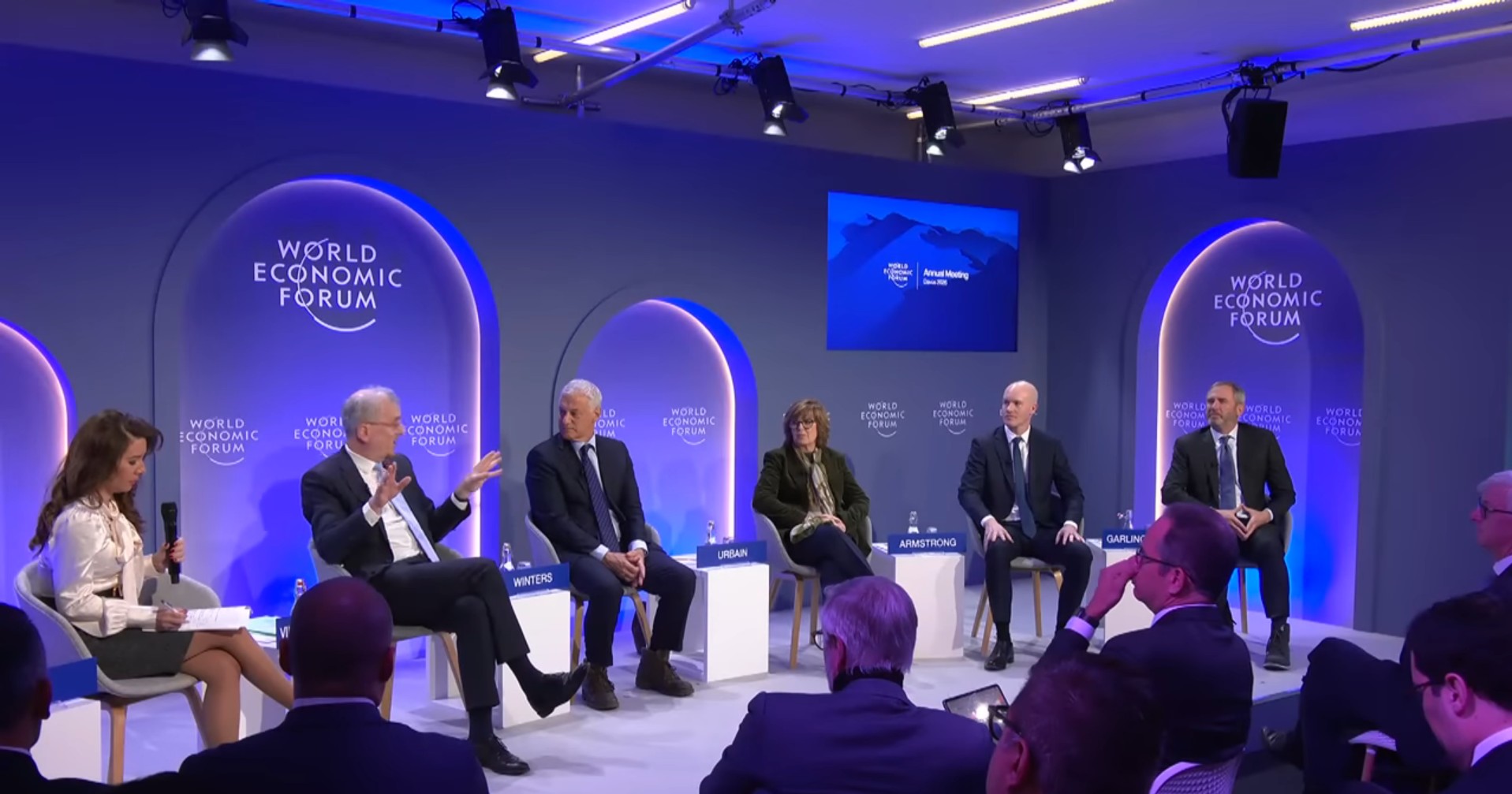
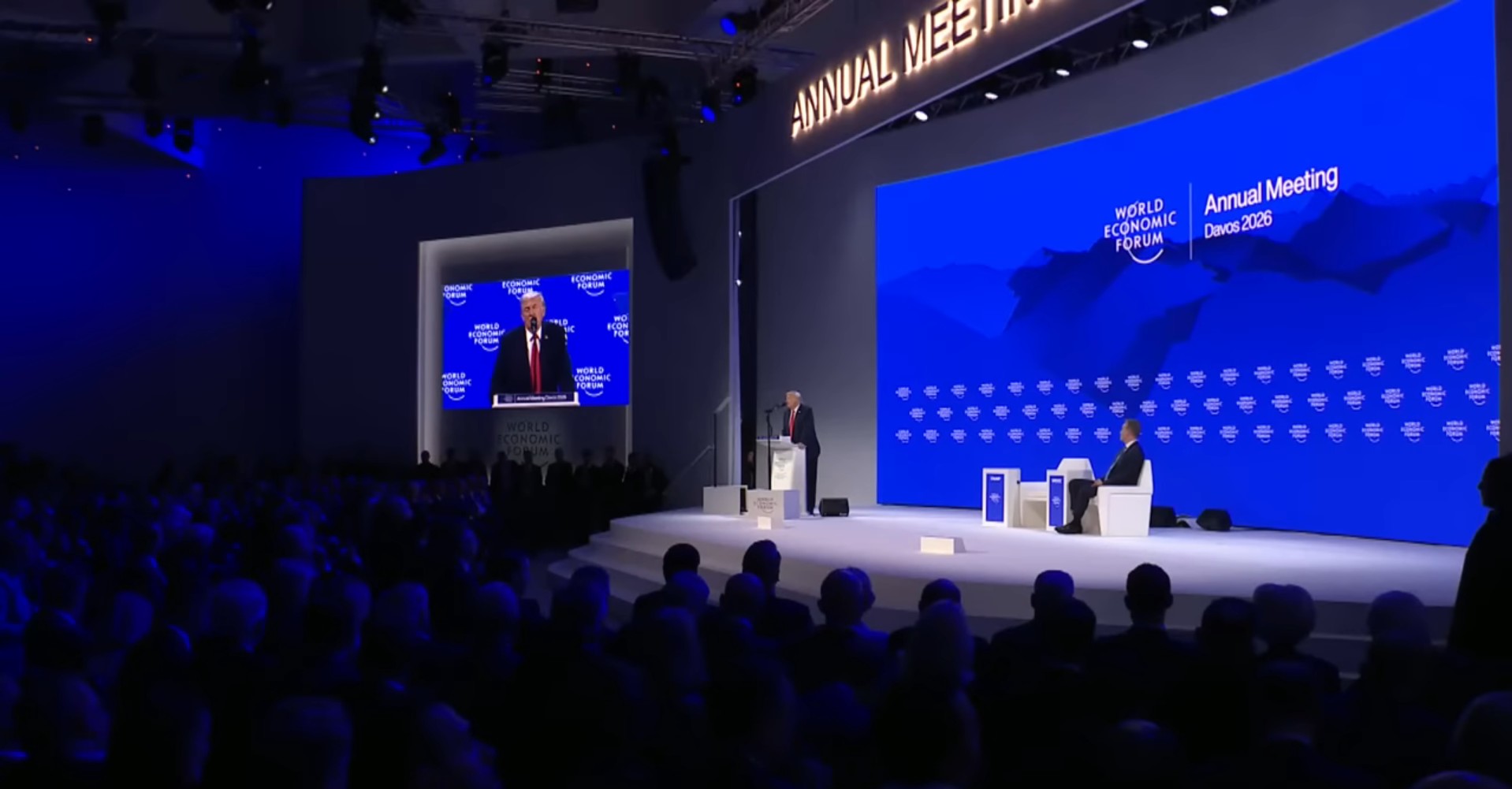
Former US President Donald Trump used his Davos address to reiterate his ambition to make the United States the global crypto capital, framing pro-crypto legislation as a matter of geopolitical necessity. He underscored the urgency of ensuring US dominance in the digital asset space, positioning it as a competitive race against other nations. This stance sharply contrasted with the skepticism voiced by some European central bankers. In a panel discussion, the Governor of the Bank of France, François Villeroy de Galhau, expressed concerns about the potential threats that private money and yield-bearing stablecoins pose to monetary sovereignty and financial stability. This divergence illustrates the fundamental philosophical differences shaping crypto policy worldwide.
Stablecoins and the Sovereignty Debate
A key point of contention revolved around stablecoins and their implications for monetary control. While some crypto executives, like Coinbase CEO Brian Armstrong, see Bitcoin as a modern equivalent to the gold standard and a check on governmental spending, Villeroy de Galhau argued that relinquishing control of money to private entities would undermine democracy. He further criticized interest-bearing stablecoins, suggesting they could destabilize the existing financial system. Circle CEO Jeremy Allaire, however, dismissed such fears, arguing that the incentives involved are too small to pose a systemic threat, citing money market funds as a historical parallel.
Tokenization‘s Emerging Prominence
Tokenization, the process of representing real-world assets on a blockchain, emerged as a notable theme. Villeroy de Galhau praised tokenization‘s potential to modernize financial infrastructure. Changpeng Zhao, founder of Binance, echoed this sentiment, suggesting it as the next phase of the industry. He revealed discussions with numerous governments to tokenize state-owned assets, a move aimed at unlocking value and fostering economic development. This signals a growing acceptance of blockchain technology’s potential beyond cryptocurrencies.
Binance‘s Uncertain US Future
The future of Binance in the US also came under scrutiny. Binance co-CEO Richard Teng remained cautious about the exchange’s return to the US market, while Ripple CEO Brad Garlinghouse predicted Binance‘s eventual re-entry. Binance.US was established as a separate entity to serve US customers; however, regulatory scrutiny has dogged the exchange. This uncertainty reflects the complex regulatory environment and the challenges facing crypto businesses seeking to navigate the US market. The events at Davos 2026 demonstrated that crypto is no longer a niche topic, but a central theme in global economic and political discourse. The discussions revealed contrasting visions for the future, highlighting the ongoing tensions between innovation and regulation as the industry continues to evolve.