


The Great Stablecoin Divide: A Tale of Two Regimes
The digital asset landscape is undergoing a significant transformation, particularly within the realm of stablecoins. A recent report by blockchain security auditor CertiK highlights a growing chasm in global liquidity, driven by the diverging regulatory approaches of the United States and the European Union. This divergence, largely shaped by the US’s GENIUS Act and the EU’s Markets in Crypto-Assets (MiCA) regime, is effectively creating two distinct pools of stablecoin liquidity, raising concerns about market fragmentation and cross-border frictions.
US Regulatory Clarity and its Implications
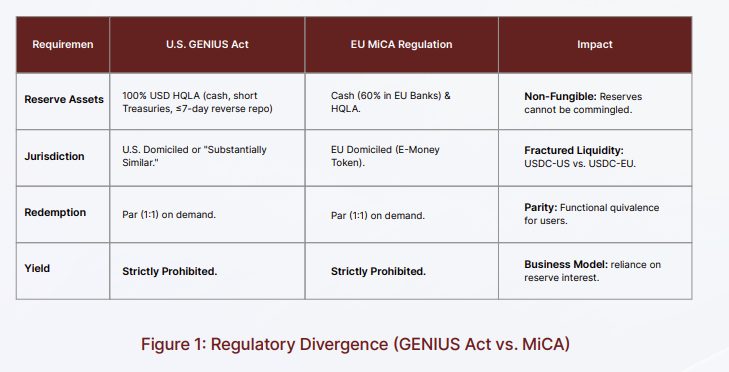
The US market, post-2025, has entered a period of regulatory clarity, largely due to the GENIUS Act. This legislation, signed into law by President Trump, provides a federal framework for payment stablecoins. The Act’s core tenets include strict reserve requirements, the prohibition of yield-bearing stablecoins, and the formal integration of stablecoin issuers into the US financial system. While offering much-needed certainty for US-based issuers, CertiK’s report emphasizes that the Act is simultaneously accelerating the global market split.
The EU’s MiCA and its Approach
The EU’s MiCA regime, while sharing similarities with the GENIUS Act – such as the requirement for full redemption at par and the ban on yield – adopts a different approach. MiCA has drawn criticism, particularly regarding its potential to introduce banking concentration risk. The requirement that a majority of issuer reserves be held in EU-based banks has raised concerns among industry players. For instance, Tether CEO Paolo Ardoino has voiced concerns about the potential for systemic risk given that banks operate under fractional reserve systems. Others fear MiCA could create higher barriers to entry for smaller issuers, potentially stifling innovation and competition.
Fractured Liquidity and the Future of Stablecoins
Neither the GENIUS Act nor MiCA appears designed to foster global stablecoin fungibility. Both frameworks prioritize regulatory oversight and financial stability, with the US explicitly seeking to reinforce the dominance of the US dollar. Treasury Secretary Scott Bessent echoed this sentiment earlier this year, stating that the administration views stablecoin regulation as a tool to extend the dollar’s global reach. This strategic alignment, coupled with MiCA’s banking requirements, suggests that the days of a single, unified stablecoin market may be waning.
Potential Market Consequences
The implications of this regulatory divergence are far-reaching. CertiK anticipates stablecoin liquidity to become increasingly segmented by jurisdiction, potentially introducing cross-border settlement friction. This fragmentation could also pave the way for regional stablecoin arbitrage, creating opportunities for those who can navigate the differing regulatory landscapes. The report’s findings underscore the importance of understanding these regulatory shifts for anyone involved in the digital asset space. Investors, issuers, and traders alike must adapt to this new reality of segmented liquidity and navigate the evolving legal landscape to capitalize on the opportunities and mitigate the risks associated with the changing stablecoin ecosystem.

