


Beyond the Fed: Treasury Bills Take Center Stage in Bitcoin‘s Price Action
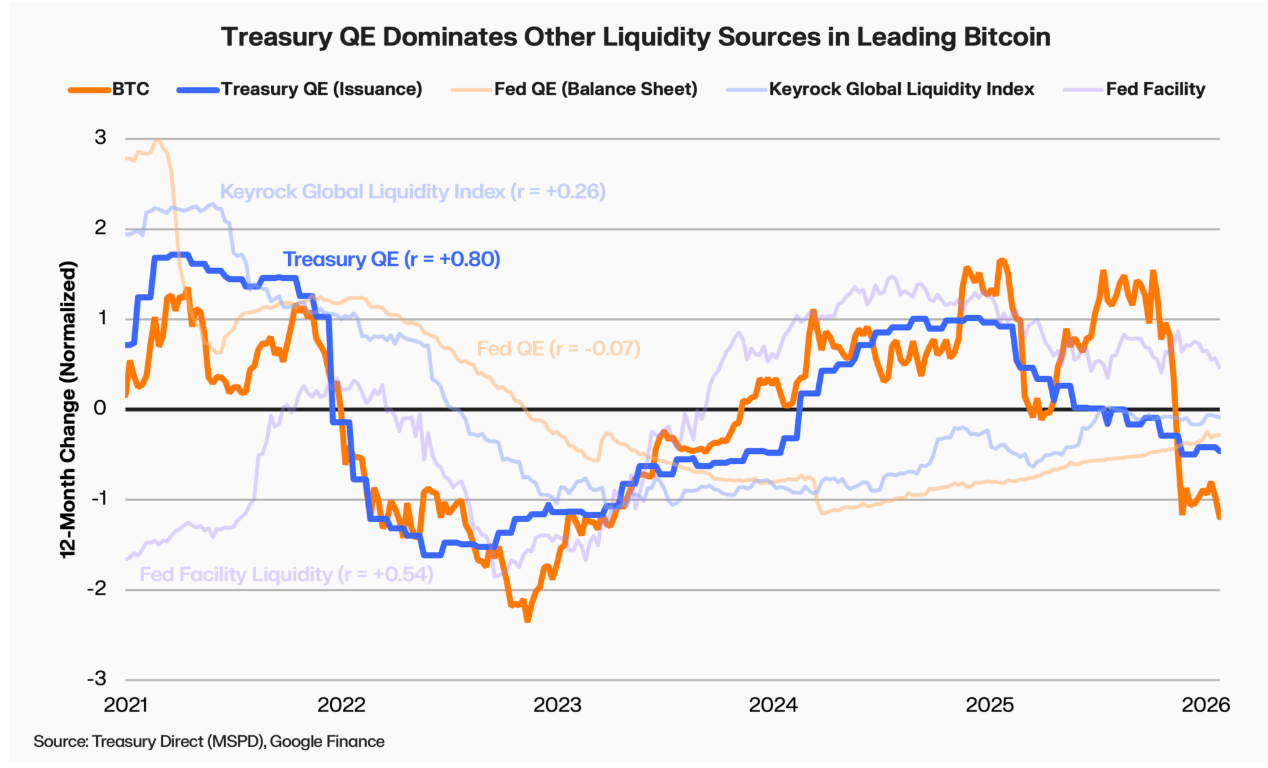
In a surprising twist, recent research from Keyrock, a crypto investment firm and market maker, suggests that the issuance of US Treasury bills is the dominant force influencing Bitcoin‘s (BTC) price, rather than the widely scrutinized actions of the Federal Reserve or other central banks. This analysis challenges conventional wisdom, offering a fresh perspective on the mechanisms driving the cryptocurrency market.

The Liquidity Link: How Treasury Bills Shape Bitcoin‘s Trajectory
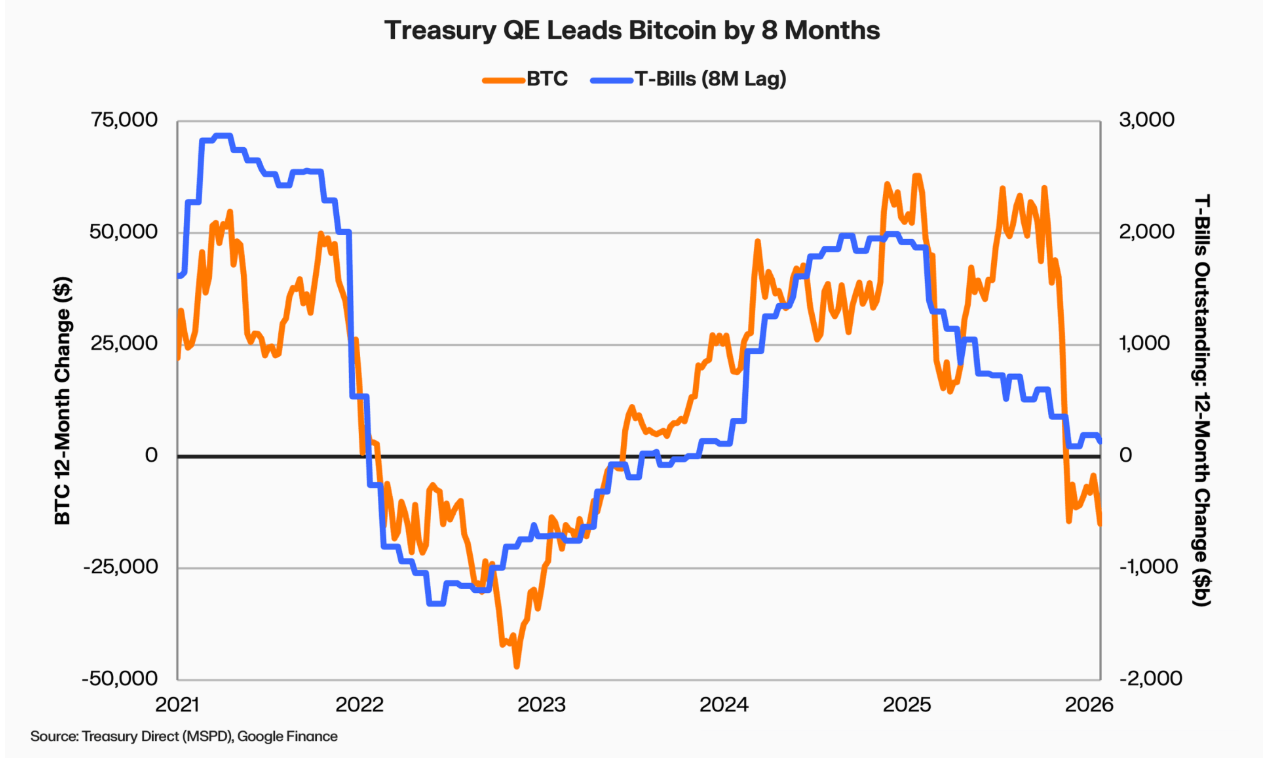
The report highlights a remarkable 80% correlation between Treasury bill issuance and Bitcoin prices since 2021, with the former often preceding the latter by approximately eight months. This relationship stems from the flow of newly created money. When the Treasury increases bill issuance, it fuels spending within the real economy, eventually trickling into risk assets like Bitcoin. Conversely, when issuance slows or turns negative, this fiscal tailwind diminishes, potentially impacting BTC’s growth trajectory.
The Inflection Point: Debt, Liquidity, and the Future of Bitcoin
Keyrock‘s analysis points to a critical “inflection point” in global liquidity, driven by the substantial US national debt. With a significant portion of this debt maturing over the next four years, the US Treasury will face the task of refinancing at potentially higher interest rates. The report forecasts a ramp-up in Treasury bill issuance, projecting an annual range of $600 billion to $800 billion through 2028. This expected surge in liquidity could have significant implications for Bitcoin‘s price in the years to come, particularly in late 2026 and early 2027, as predicted by the research.
Institution’s Role and the Changing Landscape
Interestingly, the analysis also notes that institutional investments and exchange-traded funds (ETFs) have somewhat dampened Bitcoin‘s sensitivity to liquidity conditions, approximately by 23%. This suggests a maturing market, where larger players are potentially influencing price movements, altering the correlation’s raw impact. It underscores the evolving dynamics of the crypto ecosystem and the need to consider multiple factors when assessing market behavior.
Implications for Bitcoin Investors
This research provides valuable insights for Bitcoin investors, shifting the focus from solely monitoring Federal Reserve policies to closely observing Treasury bill issuance trends. Understanding the interplay between these financial instruments and the flow of liquidity could provide a significant edge in navigating the market. It also highlights the interconnectedness of traditional finance and the crypto space.
Disclaimer
This analysis is based on research provided by Keyrock and should not be considered financial advice. Investors are encouraged to conduct their own thorough research and consult with financial advisors before making investment decisions.
This is an important topic to consider.

