


The Anatomy of a $50 Million Mistake
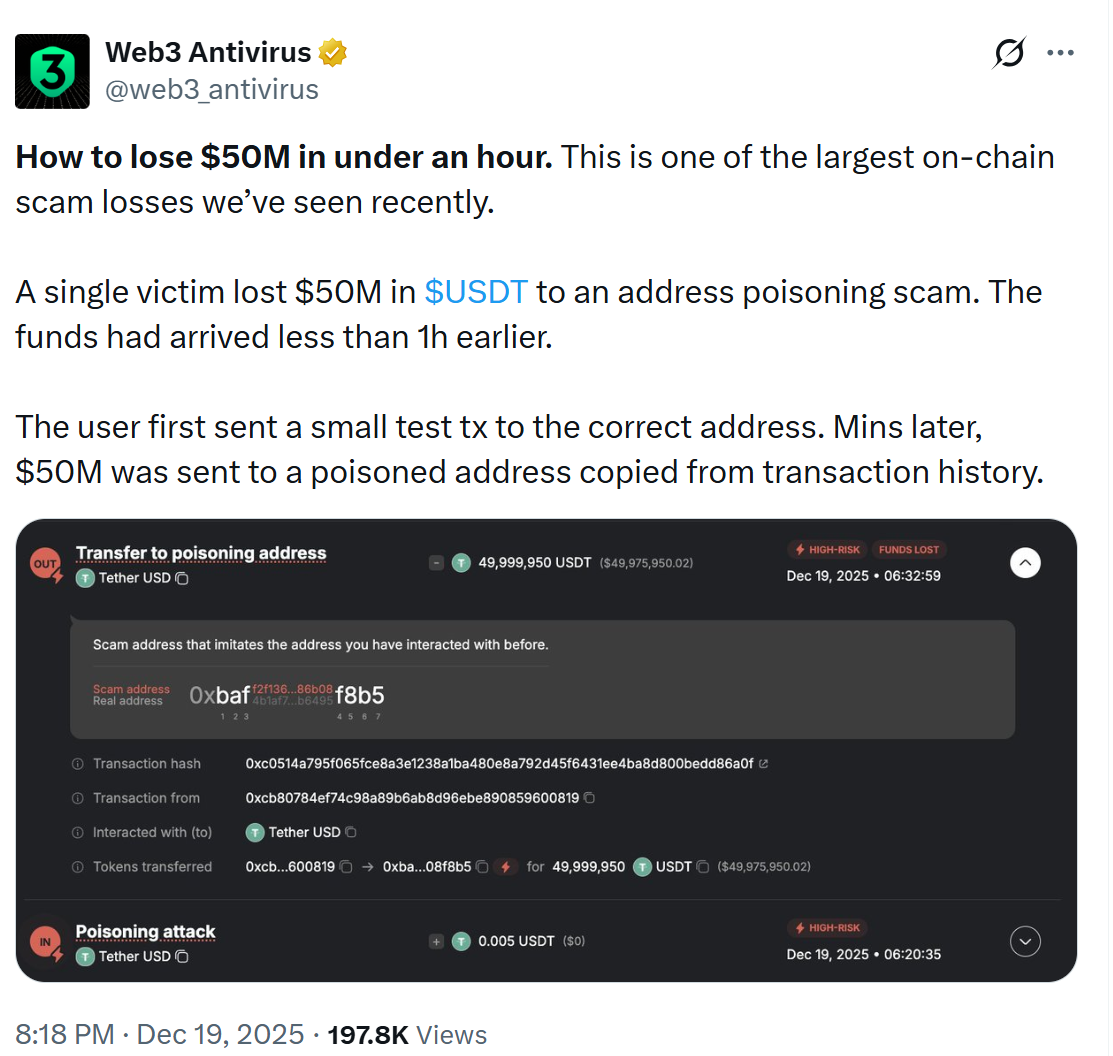
In a stark reminder of the risks inherent in the crypto space, a user suffered a staggering loss of nearly $50 million in USDt. The culprit? A seemingly innocuous copy-paste error that fell victim to the insidious tactics of an address poisoning scam. This incident highlights the importance of meticulous attention to detail and a deeper understanding of the threats lurking within the blockchain ecosystem.
How Address Poisoning Works
Address poisoning is a sophisticated form of attack that preys on human behavior rather than exploiting system vulnerabilities. Attackers utilize small, initial transactions to inject look-alike wallet addresses into a victim’s transaction history. These addresses often share a few characters at the beginning and end, making them visually similar to the legitimate recipient’s address. When a user, in a hurry or unaware of the risk, copies and pastes from their transaction history, they may inadvertently select the attacker’s wallet.
The Fatal Error and the Fallout
In this particular case, the victim, who had been actively using their wallet for approximately two years primarily for USDT transfers, seems to have fallen prey to this deceptive practice. After withdrawing funds from Binance, a small test transaction was likely sent successfully to the intended address. Minutes later, however, the catastrophic transfer of almost $50 million was executed to the poisoned address. Onchain data confirms the loss of 49,999,950 USDt.
Expert Insights and the Attacker’s Actions
Onchain investigators like Web3 Antivirus have meticulously analyzed the incident, shedding light on the attacker’s movements. After receiving the stolen funds, the attacker swiftly converted the USDT into Ether (ETH), dispersing it across multiple wallets and partially funneling it through Tornado Cash, a well-known crypto mixer. Security researcher Cos from SlowMist noted that even experienced users can be deceived, as the similarity between addresses can be surprisingly effective. As another analyst put it, “This is the brutal reality of address poisoning, an attack that doesn’t rely on breaking systems, but on exploiting human habits.”
A Wake-Up Call for Crypto Users
This incident serves as a crucial lesson for everyone in the crypto community. It underscores the necessity of verifying addresses carefully, particularly when dealing with large sums. Some best practices include:
- Double-checking the first and last few characters of any wallet address.
- Using address book features in your wallet to save frequently used addresses.
- Avoiding copying addresses directly from transaction history unless absolutely necessary.
- Consider using hardware wallets and other security measures.
The Broader Implications
This $50 million loss is a significant figure, and it is a sobering reminder of the constant security risks associated with digital assets. While individual mistakes are impossible to eliminate, heightened vigilance and adopting robust security practices are vital to safeguarding your holdings. This incident also comes at a time where overall crypto losses are on the rise, emphasizing the need for robust security and awareness within the whole industry.
The incident highlights the need for continuous vigilance in the ever-evolving world of cryptocurrency.

