A New Era for Decentralized Applications
As 2025 drew to a close, a subtle but significant shift permeated the cryptocurrency landscape. Gone were the heady days of DeFi summers and NFT frenzies. In their place emerged a pragmatic focus on utility. Decentralized applications (DApps), built on blockchain networks and powered by smart contracts, stood poised to redefine how users interact with the digital world. The question now looms: can these applications thrive without the crutch of speculative incentives?
Building the Foundation: 2025 in Review
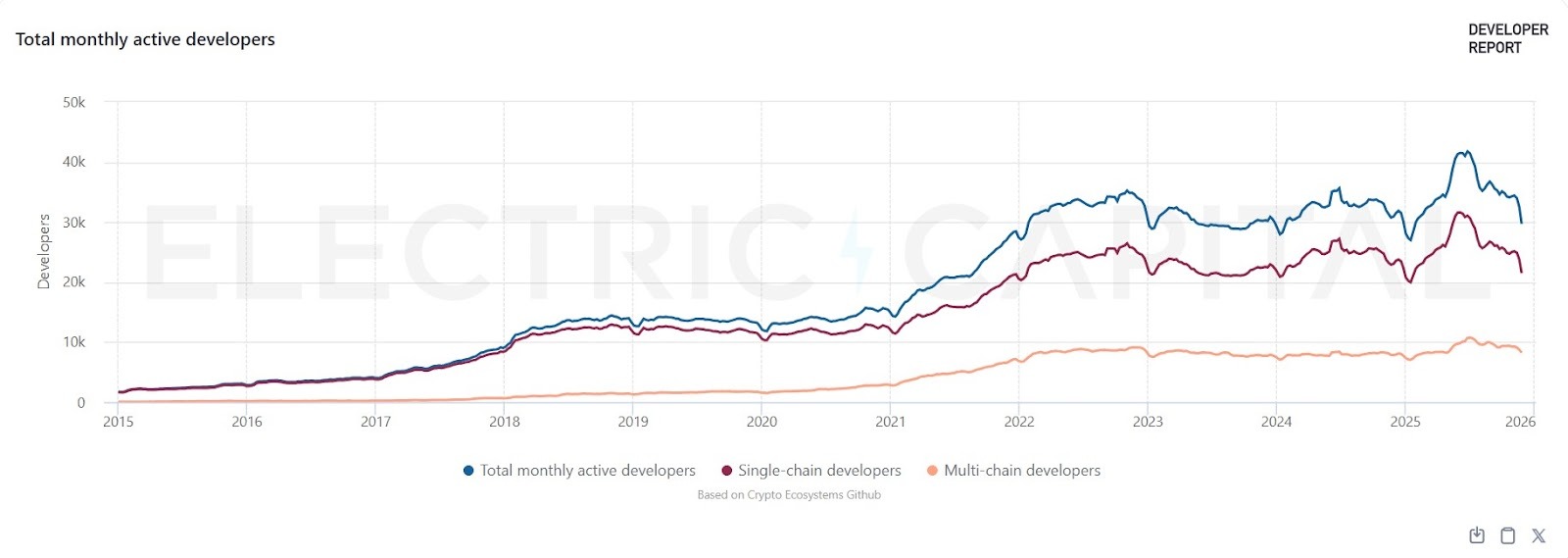
The year 2025 was largely dedicated to laying the groundwork for widespread DApp adoption. Developers, showing remarkable resilience, shifted from rapid prototyping to long-term strategies. According to the Electric Capital Developer Report, the number of full-time crypto developers actually increased, even as the overall count dipped, indicating a shift towards a more committed and professional ecosystem. This meant less emphasis on short-lived projects and more focus on building the infrastructure for a sustainable future.
This foundational work also involved addressing key user experience (UX) pain points. Account abstraction became increasingly prevalent, mimicking familiar login mechanisms. Gas sponsorships alleviated transaction fees, and social logins and MPC wallets simplified the user journey. The evolution of layer-2 scaling solutions, like those on Solana, further enhanced speed and efficiency, paving the way for a more seamless experience.
The Utility Test: What 2026 Holds
The stage is now set for 2026, where the true test of DApp relevance will unfold. The industry’s pivot to utility is about to be put to the test. Will these applications provide sufficient value to attract and retain users, or will they falter without the allure of yield farming and token rewards?
Competing with Web2 and the Rise of Super Apps
To succeed, DApps must go head-to-head with Web2 applications, which boast immense scale and established user bases. This means removing the friction that has historically plagued crypto adoption. The move towards interoperable “super apps,” aggregating multiple functionalities within a single interface, could be key. Imagine a single platform integrating payments, savings, creator tools, gaming assets, and social identities, providing a seamless user experience reminiscent of platforms like WeChat or Grab.
Ecosystem Showdown: The Contenders
Several ecosystems are positioning themselves for dominance in 2026, each with distinct advantages. Ethereum, still the hub of smart contract development, is undergoing incremental upgrades focused on data availability and enhanced security. Solana, with its blazing-fast transaction speeds, is targeting consumer-focused applications. The Open Network (TON), boosted by Telegram’s enormous user base, boasts a powerful built-in distribution channel.
Beyond the Chains: Emerging Trends
Beyond the established blockchains, specific sectors could redefine the landscape. Decentralized physical infrastructure networks (DePIN), connecting crypto to real-world workflows like bandwidth and energy, gained significant traction in 2025. Creator-focused DApps are also moving beyond NFTs to address micro-IP ownership and fan-driven monetization models.
In 2026, the success of DApps will hinge on distribution, scalability, and, most importantly, clear, everyday use cases.
The Verdict: Practicality over Promises
The year 2026 will be a watershed moment. As infrastructure matures, the focus will shift from transaction speeds to the inherent value of the products. The winners will be those that feel familiar and easy to use, with simple onboarding, invisible gas fees, and stable cost structures. If 2025 was the year of construction, 2026 is shaping up to be the year where DApps must prove their utility and deliver real-world value. The future of crypto hinges on this transition.