The Rise of AI and the Decentralized GPU Compute Market
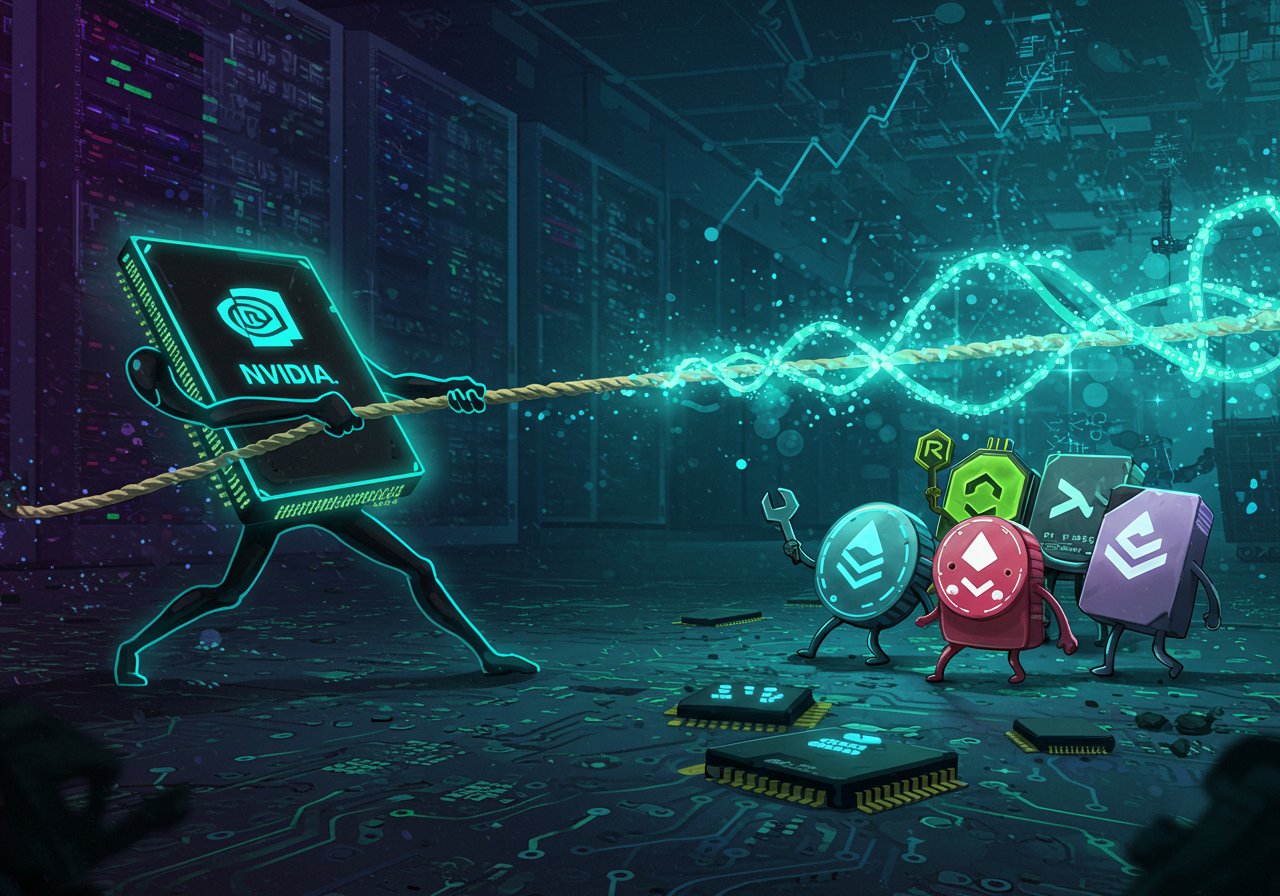
Nvidia‘s Vera Rubin architecture, a cutting-edge advancement in AI computing, has sent ripples through the cryptocurrency world, specifically impacting decentralized GPU networks like Render, Akash, and Golem. Launched at CES 2026, Rubin aims to drastically reduce the cost of running complex AI models. This efficiency gain poses a direct challenge to crypto networks that rely on the scarcity and utilization of GPUs to thrive. However, the narrative is more nuanced than a simple competition.
The Jevons Paradox and the Expansion of Compute Demand
Historical precedent suggests that increased efficiency in computing often leads to an expansion of overall demand, rather than a contraction. This phenomenon, known as the Jevons Paradox, suggests that when technology makes something cheaper and more accessible, it can unlock new use cases and attract more users. In the context of GPU computing, cheaper and more efficient access could foster the development of novel applications and increase overall demand, even as the cost per computation decreases. The cloud computing industry provides a prime example of this.

Decentralized GPU Networks: Niche and Value Proposition
While Nvidia‘s advancements concentrate on hyperscale data centers, decentralized networks like Render, Akash, and Golem are carving out their own space in the market. These platforms focus on aggregating underutilized GPUs, offering flexible and short-term compute solutions. Their value lies in providing accessible compute power for tasks that don’t fit the long-term contracts of large AI data centers. Think of 3D rendering, visual effects, and AI model training where short-term agility is a priority.
The Persistent GPU Scarcity and Its Impact
Despite the advancements in computing efficiency, the supply of high-end GPUs remains constrained. A crucial component, high-bandwidth memory (HBM), is in short supply, with major manufacturers already selling out their 2026 output. This scarcity ensures that decentralized compute networks can continue to exist. They serve as alternatives, offering access to GPUs for developers and workloads that cannot secure long-term capacity within the tightly controlled AI data centers.
The Convergence of Crypto Mining and AI
The AI boom has also begun to reshape the crypto mining industry. Many mining operations are repurposing their infrastructure to support AI and high-performance computing. Facilities built around power, cooling, and physical space, similar to those needed by AI data centers, are becoming increasingly valuable. This shift is highlighted by companies like Bitfarms, which are adapting their mining sites to accommodate Nvidia‘s Vera Rubin systems.
Conclusion: A Symbiotic Future
Nvidia’s Vera Rubin architecture does not eliminate the space for decentralized compute networks. Instead, it alters the competitive landscape. The market will see a symbiotic relationship, with hyperscale infrastructure handling long-term commitments and specialized workloads, while decentralized networks facilitate short-term needs. Decentralized platforms offer flexibility, catering to the growing demand for GPU resources in an era of technological advancements and persistent hardware constraints. The future of GPU compute will likely be a dynamic blend of centralized and decentralized solutions, each fulfilling distinct needs in the evolving technological landscape.