


Finality‘s Flexibility: Ethereum‘s Core Strength
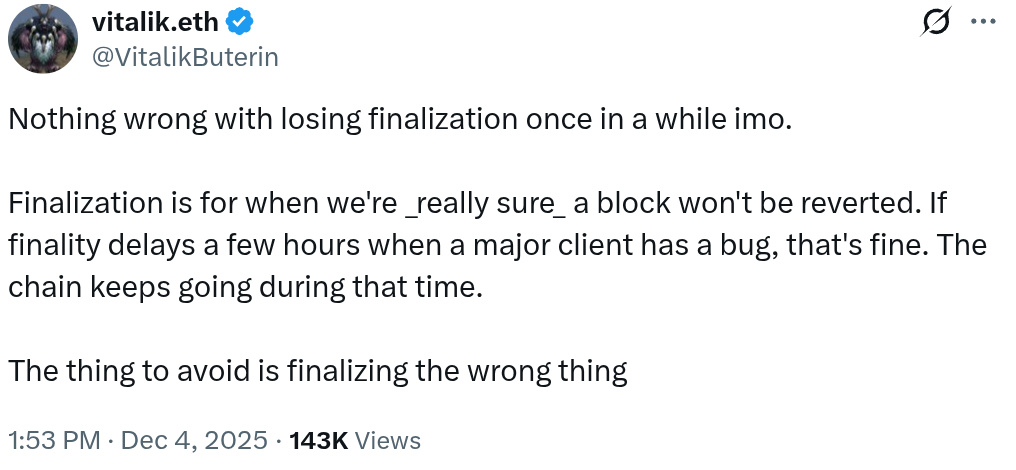
Ethereum co-founder Vitalik Buterin recently addressed concerns regarding the potential for temporary loss of finality within the Ethereum network. His stance? It’s not necessarily a catastrophic event. In fact, Buterin argues that occasional instances where finality is delayed are manageable and don’t inherently pose a significant threat to the network’s security or operational integrity. This perspective offers a nuanced understanding of how Ethereum operates and its ability to withstand certain types of challenges.
Understanding Finality and its Significance
Finality, in the context of a blockchain like Ethereum, refers to the point at which a block of transactions is considered irreversibly confirmed. Once a block is finalized, it’s virtually impossible to revert or reorganize the chain. This deterministic nature is a crucial aspect of Ethereum‘s design, providing strong guarantees about the validity and permanence of transactions. The recent issues with the Prysm client brought this topic to the forefront, reminding the community of how the network functions.
Buterin’s Perspective: A Practical Approach
Buterin’s assessment acknowledges that minor disruptions, such as a temporary loss of finality, are not a cause for widespread alarm. The primary concern, as he pointed out, isn’t the delay itself, but rather the potential for finalizing incorrect data. This viewpoint emphasizes the importance of safeguarding the overall integrity of the blockchain rather than obsessing over strict timelines. According to experts such as Fabrizio Romano Genovese, Ethereum can function with a level of probabilistic finality, similar to Bitcoin.
Impact on Layer 2s and Bridges
However, the loss of finality isn’t without consequences. Infrastructural elements, such as Layer 2 (L2) solutions and cross-chain bridges, that rely on the certainty provided by finality, can experience delays. As reported by Polygon, while their operations would continue, transactions from Ethereum to the sidechain may be delayed until finality is restored. It’s noteworthy that the delays may affect the speed of transaction confirmation, but the core security of user assets is not compromised. Moreover, some bridges may need to adjust their procedures in light of the potential for temporary finality issues.
The Bottom Line: Resilience and Adaptability
Buterin’s comments highlight Ethereum‘s inherent resilience and the importance of adapting to occasional disruptions. The occasional delay is the price for other features and benefits. The ability to function even in the face of such challenges demonstrates the robustness of the network. This perspective is important for users and developers navigating the complex world of decentralized finance and blockchain technology. The real focus should be on ensuring that the finalized information is accurate, not just the speed with which it’s finalized.

