


Fusaka: Ethereum‘s Agile Approach to Scaling
Ethereum’s journey toward becoming a truly scalable blockchain continues with the Fusaka upgrade. This isn’t just another incremental step; it signals a shift in Ethereum’s development philosophy, prioritizing focused, impactful updates over lengthy, all-encompassing overhauls. This approach is crucial for navigating the evolving demands of the network and maintaining its position as a leading smart contract platform.
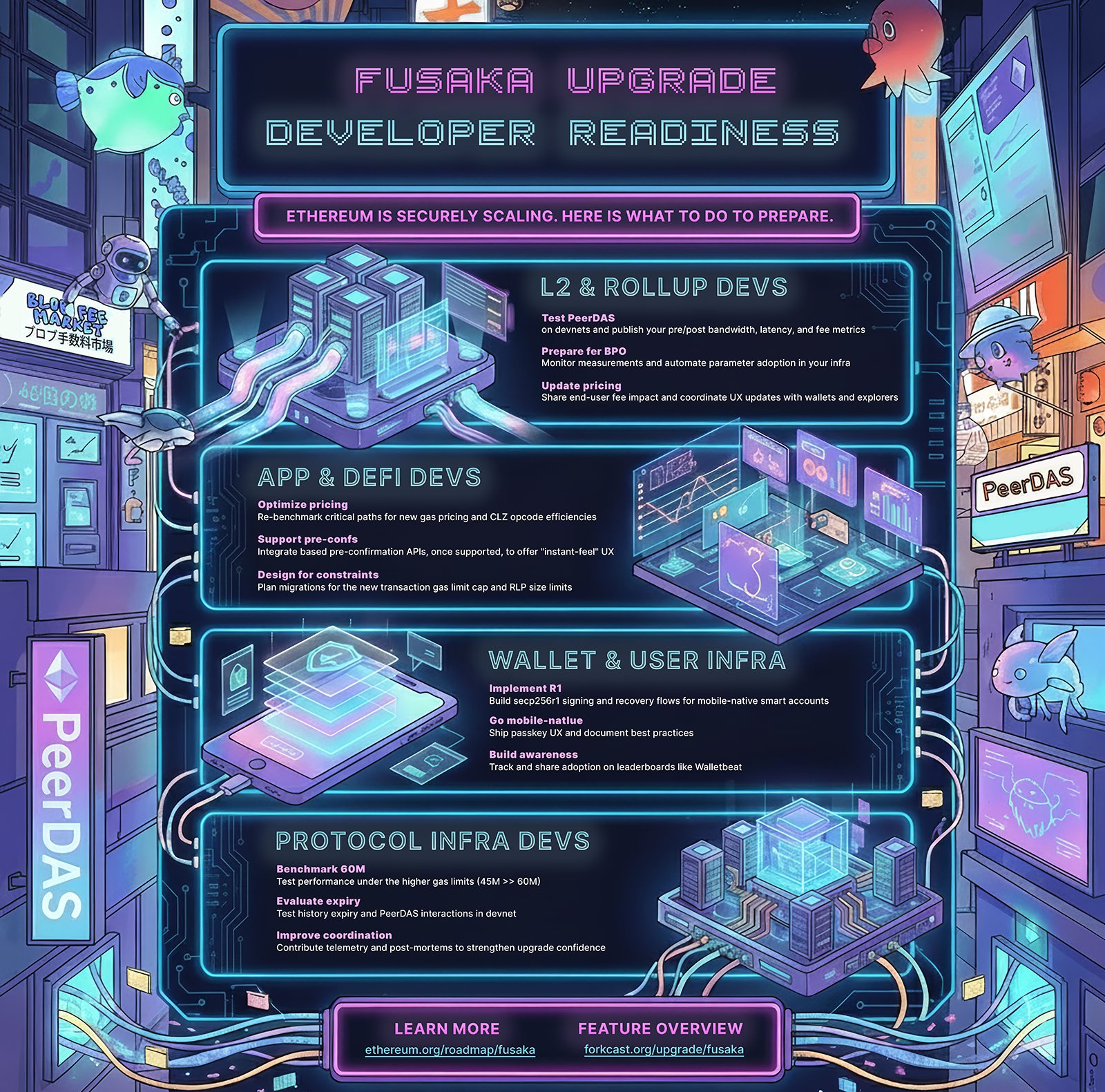
Peer Data Availability Sampling (PeerDAS): The Core Innovation
At the heart of Fusaka lies Peer Data Availability Sampling (PeerDAS), a technical refinement designed to enhance how Ethereum handles data from Layer-2 (L2) rollups. The primary goal is to alleviate the strain on node operators by optimizing data verification. Instead of validators needing to download entire data packages (blobs), they sample smaller portions across the network. This approach reduces data duplication and bandwidth consumption, paving the way for increased data capacity and, crucially, making the system more efficient.
Impact on Layer-2 and the Fee Structure
The implications of Fusaka extend beyond mere technical improvements. The upgrade is designed to cultivate a more symbiotic relationship between Layer-1 (L1) and L2 solutions. By tweaking fee structures, the goal is to ensure a fair balance where L2s have access to affordable data space on L1, and L1 is appropriately compensated. This balance is critical for the long-term sustainability of Ethereum‘s rollup-centric roadmap. The early indicators point to lower gas fees and reduced network congestion, offering immediate benefits to users.
Focus on Home Stakers and Decentralization
A key consideration throughout the Fusaka design has been the preservation of decentralization and the accessibility of running a node. Extensive testing was conducted to ensure the upgrade remains compatible with consumer-grade hardware, protecting the participation of home stakers, a vital part of the Ethereum ecosystem. The core philosophy centers on expanding capacity without compromising the fundamental values of the network. As Chris Berry of Bitwise noted, “It’s all about scaling without compromising our core values.”
The Path Forward: Utilization and Reliability
The success of Fusaka will be measured not only by its seamless deployment but also by the subsequent network utilization. The true test will be if the increased capacity is effectively absorbed by the ecosystem, leading to more data being processed and higher gas usage per block. It’s a pragmatic approach to scaling, emphasizing reliability and sustainable growth over short-term gains. The expectation is that this upgrade will not only enhance the user experience by lowering gas fees but also create a more robust and scalable foundation for the future of Ethereum.
Fusaka‘s Importance
- Streamlined Rollup Data Handling
- Reduced Network Congestion
- Optimized Fee Balance
- User-Friendly Experience
The ongoing development and improvement of Ethereum will continue to evolve.

